Living in the In Between

Ethan’s Dad: Particularly since we recently celebrated Easter, I want to pick up a thread of what Ethan’s mom talked about in her last post. If you are a Christian, there can be a palpable tension about the subject of death. We are taught from early on in our Christian walk that the existence of death is a consequence of sin that began with Adam and Eve in the Garden of Eden. It signifies the seriousness of the separation between God and humanity sin produces. Yet, we are also taught that death is not the true end of the story of life: that yes, Jesus came and died, but also that He rose from the grave, and because He conquered death, we will be reunited with God — and with everyone who has died believing upon Jesus — in the age to come. Thus, for the Christian, death is simultaneously understood as the ultimate enemy of God’s original design for creation and also as an obstacle that Jesus has overcome, and so it should not be feared. At times, you will even read or hear Christians — wrongly I think — attempt to meld those two ideas into a lesson that death is really just a natural part of life.

The theme of Ash Wednesday is sometimes twisted into this idea that death is a natural part of life. Ash Wednesday asks us to ponder the fact that we are dust. From dust we came and to dust we shall return. (Genesis 3:19). The Psalmist prays for God to teach us to number our days. (Psalm 90:12). Paul reminds us that we are the clay and God is the potter. (Romans 9:19-21). So, this idea runs throughout Scripture. On Ash Wednesday, the fact that we are dust is said solemnly — with a sense that we prefer not to think about death, that we avoid the fragility of life, that we distract ourselves from reality.

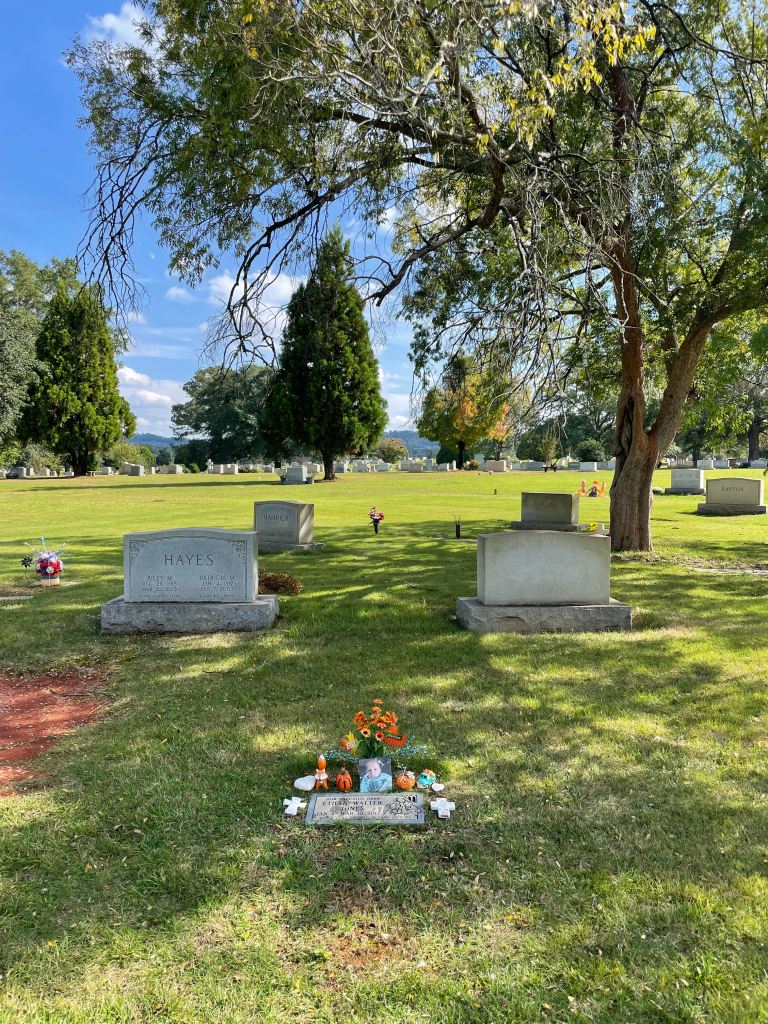
But what about those of us for whom death is all too real? Each week, I take time to sit at Ethan’s grave, and death is all around me. I carry Ethan’s death with me every day. I do not have to will myself to ponder the fleeting nature of life here on earth because I helplessly watched it slip away from a two-month old. So, for me, Ash Wednesday does not conjure anything that I strive to avoid. And saying that we just need to accept that death is part of life feels like asking me to be okay with Ethan’s death. But I cannot do that. No matter how much I contemplate the inevitability of death, or the lack of control over when it comes, or the fact that it affects everyone, it does not quell this knot within me that screams that this is wrong, that it is not the way it should be, that a theft has occurred which cannot be restored.

Moreover, the idea that we are “just dust” does not tell the whole story of who we are. Scientists will tell you that our bodies are made primarily of carbon and water. But in the Bible, dust and clay are used as metaphors to give us pictures of our relationship with God, not as scientific observations. The Bible is full of exhortations about our souls, the spiritual part of our being.

  • Deuteronomy 6:5: “Love the Lord your God with all your heart and with all your soul and with all your strength.”
  • Psalm 23:3: “He refreshes my soul.”
  • Psalm 35:9: “Then my soul will rejoice in the Lord and delight in his salvation.”
  • Psalm 84:2: “My soul yearns, even faints, for the courts of the Lord; my heart and my flesh cry out for the living God.”
  • Matthew 10:28 (Jesus speaking): “Do not be afraid of those who kill the body but cannot kill the soul. Rather, be afraid of the One who can destroy both soul and body in hell.”
  • Hebrews 6:19: “We have this hope [of salvation by Jesus] as an anchor for the soul, firm and secure.”
  • 1 Peter 1:9: “For you are receiving the end result of your faith, the salvation of your souls.”

Thus, the Bible teaches that when our bodies die, our souls do not. Furthermore, the Bible tells us that the birth of sin into the world did not just result in physical death; it caused spiritual separation between God and humanity. In fact, this is deemed to be the more serious aspect of sin’s consequences. And when Jesus died on the Cross, He did not just take our deserving physical punishment for sin; He also endured spiritual separation from God. This is why He says on the Cross: “My God, my God, why have you forsaken me?” (Matthew 27:46).

That takes us forward to Easter because when Jesus rose from the grave, He unequivocally conquered physical death, but He also restored the spiritual gap between God and humanity. The central message of Christianity is that “God so loved the world” — that is, humanity, we physical and spiritual beings who bear His image — “that he gave His one and only Son, that whoever believes in Him shall not perish but have eternal life.” (John 3:16). That eternal life is both physical and spiritual. Revelation ends with the resounding proclamation that one day Jesus “will wipe every tear from our eyes. There will be no more death, or mourning or crying or pain, for the old order of things has passed away.” (Revelation 21:4). Paul also tells us that when “the end comes, [Jesus] will hand over the kingdom to God the Father after he has destroyed all dominion, authority and power. For Jesus must reign until he has put all his enemies under his feet. The last enemy to be destroyed is death.” (1 Corinthians 15:24-26).

So, death is the enemy that Jesus has overcome. Yet, for us, physical death is still here. It lingers, and it hurts. And that accounts for the tension I mentioned at the beginning of this post. The tension exists because, if you are a Christian, you live in the “in between”: the “already but not yet” context of knowing and believing that Jesus came, died, and rose again to save us from sin and death, but that He has not yet come again to place all things under His feet.

We are not unique in living in an “in between” age. The Israelites lived for hundreds of years in between the promise of a Messiah to come and His arrival. In fact, if you date it from the first implicit reference to Jesus in Genesis 3:15, they lived for thousands of years before His coming. Micah 7:7 echoes the sentiment: “I will watch in hope for the Lord. I will wait for the God of my salvation. My God will hear me.” Certainly, our “in between” age is better than theirs because, by the grace of God, we know who the Messiah is and what He has done, and even what He will do at the appointed time. But it is still not an easy time because there is pain, separation, and loss that exist in abundance in this world.

When Adam and Eve sinned in the Garden, could God have separated them (and by extension us) from Himself spiritually without imposing physical death as a part of the equation? In the sense that God can do anything, I suppose this was possible. But as I said earlier, the Bible tells us that to be human means that we have a dual nature: physical and spiritual. This is why, in order for God to experience everything as we do, He had to become fully human; God is spirit (John 4:24), but through Jesus He also became flesh (John 1:14). For us, committing sin means spiritual separation from God, but it also ultimately entails physical death. So, one reason Jesus had to physically die on the Cross and not “just” experience spiritual separation from God the Father was because the consequences of sin for human beings involves experiencing both, and then His saving humanity required reuniting the physical and the spiritual for eternity though a physical resurrection.

In other words, Jesus died not only to restore the communion of our spirits with the Lord, but also to redeem our bodies. To put it simply, matter matters. Sometimes I think we Christians lose sight of this fact because Jesus talked so often about how His “kingdom is not of this world.” (John 18:36). Christians get caught up in thinking that Jesus meant that His kingdom is just spiritual rather than physical, but it is not quite that simple. Jesus is the King of both heaven and earth.

“For the Lord is the great God, the great King above all gods. In his hand are the depths of the earth, and the mountain peaks belong to him. The sea is his, for he made it, and his hands formed the dry land.”

(Psalm 95:3-5). God’s creation of this world and of us as dual-nature beings, Jesus’s incarnation, His physical death and His resurrection — they all resoundingly demonstrate that our physical world, this flesh-and-blood life, is important. This is precisely why death is a profound event: the cessation of physical life — especially the deaths of the His creations made in His image — is no trifling matter to God. It is not just “the natural way of things”; it is a blight that Jesus came to reverse.

So, death is wrong, it is the enemy, because our lives are sacred and precious. But there is this part of me that keeps wondering if there is some other kind of purpose to death than just being a foil — the desolation that we praise Jesus for overcoming — while we Christians live this “in between,” which, in the personal sense, means we have been spiritually reborn (John 3:3), while we await the physical resurrection. During this “in between” we live with the loss of those who go before us and face our own physical deaths. Why?

Is it, at least in part, that it serves as a way for us to measure what is to come? Romans 8:18 reminds us that we should “consider the sufferings of the present time as not worthy to be compared to the glory which shall be revealed to us.” In a sense, that is asking us to do a comparison of our lives in the present physical world and our lives in the future in God’s restored kingdom. Are we only capable of measuring the bounty of eternity by facing, possessing, and living with a temporal ending to our own lives and the lives of those we love? Isaiah 51:6 commands us to:

“Lift up our eyes to the heavens, look at the earth beneath; the heavens will vanish like smoke, the earth will wear out like a garment and its inhabitants die like flies. But the Lord’s salvation will last forever, the Lord’s righteousness will never fail.”

Will we only grasp the permanence of God’s saving grace through Jesus after having lived, loved, and lost in this time of mortality? We would only be able to do this because of the unique creations God made us to be. That is, because an integral part of us is physical, we experience the agony of death — both those around us and ourselves — but because our souls are eternal, we will be able to remember our physical lives, the loss that death brought, and how Jesus rescued us from that despair. This is perhaps part of what Peter meant when he said that “even angels long to look into these things” that pertain to the salvation of our souls,” because they do not experience this dual life. (1 Peter 1:12).

The loss of Ethan honestly would be soul crushing without the hope of the resurrection. Living with this loss forces me to surrender what is beyond my control to God in a way that nothing else is probably capable of doing. So, it just may be that through experiencing the devastation of death that we grow to understand that life is only truly lived through and for our Maker.
Counterfeit “Resurrection”

Ethan’s Mom: Tacky skeletons hanging out of windows or lounging in Adirondack chairs.  Kitschy faux tombstones in front yards.  A larger-than-life inflatable Grim Reaper on the corner.  A house just down from my parents actually has a full tableau that includes 4 skeleton pallbearers carrying a fake coffin into a full fake cemetery.

This is Halloween 2021, and I cannot wait for it to be over. Because the sooner it arrives, the sooner people can pack all that mess up for another year and I can go back to walking or driving around my neighborhood without Death mocking me.

For the past 4 years, I have tried to figure out the appeal of this decor and the overall fascination with the macabre.  Every year I remain completely flummoxed as to why I see even more skeletons waving from the yards in my perfectly nice neighborhood, why people who cannot even acknowledge death in its real context go all out to celebrate a cartoon version of it, and why the easy and fun neighborhood trick or treating of my childhood has turned into… this?   

The only new thought I had this year is that maybe this is all another example of Satan taking something that has a basis in truth and twisting it into something false, taking something that has real, eternal meaning and cheapening it to the point of casual “fun.”  In the process, he is able to desensitize and damage our very souls. 

Yes, the dead will rise again – but not as creepy skeletons or disgusting zombies.  

Our family recently planted fall pansies in Ethan’s garden at our preschool.  In the spring, we planted flowers with the students, but the garden needed a freshening up for fall after all the spring/summer annuals faded.  At the end, I read the Liturgy for the Planting of Flowers, just as I do every time we work in the garden.  I got choked up on this line, just like I do every time I read it aloud.

Though our eyes yet strain to see it so, these tiny seeds, bulbs, or velvet buds we have

planted are more substantial than all the collected evils of this groaning world.

They are like a banner planted on a hilltop,

proclaiming God’s right ownership of these lands

long unjustly claimed by tyrants and usurpers.

They are a warrant and a witness,

each blossom shouting from the earth

that death is a lie,

that beauty and immortality

are what we were made for.

Every Moment Holy by Douglas McKelvey

Death is a lie, not a joke.

The fake cemetery in the yard down the street may have headstones with funny inscriptions, but my baby’s name is inscribed on a real marker in a real (and actually quite beautiful) cemetery where his real body lies waiting for the resurrection of the saints.  And on that day, their creepy, bony arms won’t shoot out of the ground like those tacky skeletons.  They will be raised imperishable, fully embodying all that God designed for us to be.   Until then, it is a struggle to believe that His promise of resurrection is true, especially in October.  All the decorations make it hard to follow the command found in Phillippians 4:8.

Finally, brothers, whatever is true, whatever is honorable, whatever is right, whatever is pure, whatever is lovely, whatever is admirable— if anything is excellent or praiseworthy— think on these things. 

Phillippians 4:8

I’m doing my best over here.  So can we just stick to pumpkins next year?  Please?

A Story for Our Time

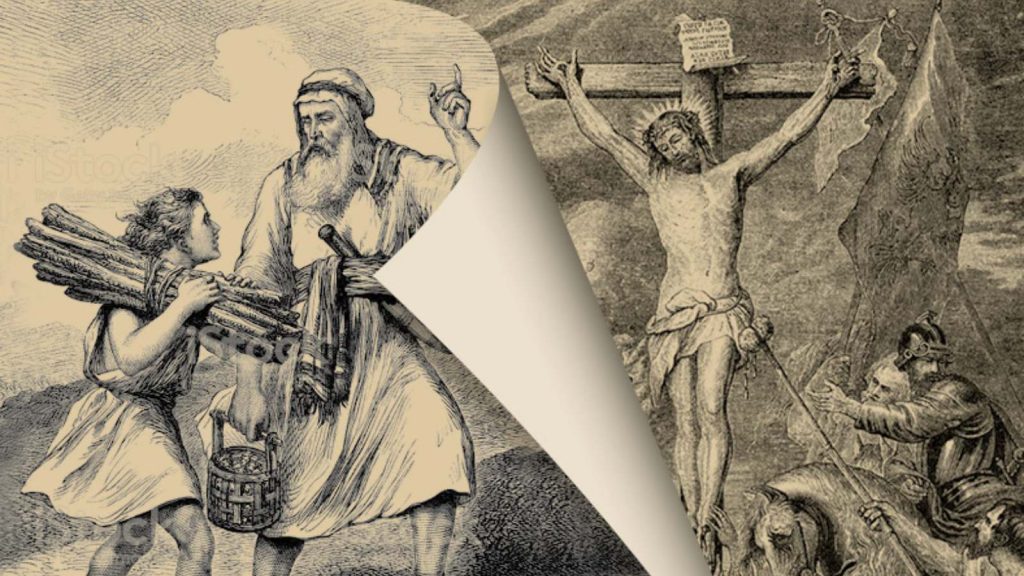
Ethan’s Dad: As my last post noted, we recently celebrated the twins’ fourth birthday. In our Bible Study Fellowship classes, the lesson for Ethan’s Mom and I that week of Ethan’s birthday was Abraham’s sacrifice of his son Isaac (Genesis 22:1-14). People who believe or live as though there is no spiritual aspect to life would ascribe that kind of occurrence to a mere coincidence, but if you believe that God exists, that He loves you, and that He is active in your life, then it is not so easy to dismiss this scheduling alignment.

So why would God have us study that particular story on that particular week? From a certain point of view, it seems cruel to have to ponder a story about God asking Abraham to sacrifice his son on the same week we remember the coming into the world of the the son we lost. And I don’t want what I am going to relate here to obscure the reality that engaging with the lesson was painful. To be sure, there are key differences between Abraham’s experience and ours: God did not ask us to give up Ethan, like He commanded Abraham to sacrifice Isaac, and our son was actually taken, without warning or explanation, while Abraham ultimately received the grace of not having to go through with the horrible deed and thus retained his son. Perhaps most importantly, the Genesis text expressly states that God was testing Abraham (22:1). As I have related in this blog before, I steadfastly believe that Ethan’s death was not a “test” from God: death is evil; it is not part of God’s original plan for us, and ascribing a tragedy like that to some sort of spiritual maturation process co-signs Ethan to being nothing more than a pawn in other people’s lives, which is absolutely wrong.

Even though we can mentally recognize those differences, the story still evokes strong emotions because of our experience. We understand what is being asked of Abraham in a tangible way few others can. Likewise, we have a deeper sense of what it actually meant for God to sacrifice, and be separated from, His Son Jesus on the Cross. (Though no human can adequately grasp the level of that sacrifice because Jesus physically endured an almost unimaginably grotesque death, He spiritually bore the entire sin of the world for all-time, and He and the Father had never before experienced the separation this sacrifice required). But if you asked us, we would say in a heartbeat that this deeper sense of understanding the magnitude of the loss at issue is not worth it. Indeed, there have been numerous times in the wake of that most horrendous of days that we have questioned whether this whole way of setting things up makes sense or was worth it. Why would God create a world where He knew so much pain was going to be inflicted on people He says He loves?

But then you have to remember Genesis 3:15 (“And I will put enmity between you and the woman, and between your offspring and hers; he will crush your head, and you will strike his heel.”) which tells us that God also set up this world in such a way that His Son (and therefore also Himself) was going to hang on a tree by nails in order to save us. So we can’t say that God is ducking any of the pain or that this is some kind of cruel joke or game He is playing because no rational person would set up such a wrenching game. In other words, God could identify with Abraham, and He can identify with us, just as we can with them.

And that truth got me thinking that perhaps the reason God had us do this particular lesson on this particular week was to identify with Abraham all the way through the story — not just in the sense of loss — but in order to affirm to us that Ethan was a precious gift to us, just as Isaac was to Abraham. For just as Isaac’s conception and birth were miracles, it also was a miracle that Ethan was born safely in that ambulance four years ago. As his only child, Abraham undoubtedly had spent a tremendous amount of time with Isaac before God gave this test to Abraham. We spent two priceless, brief months with Ethan, caring for him more intensely than any other baby we have had, up until the very moment he left us. But there is more to the parallel. Abraham was able to obey God’s command because Isaac’s life was a testimony to the facts that God always keeps His promises and that God does impossible things. According to Hebrews 11:19, Abraham in fact was clinging to the belief that Isaac would be raised from the dead, even though he had no concrete experience of such an event. But Abraham did know that God had demonstrated the power to create life from Sarah’s “dead” womb, and so Abraham firmly believed (because otherwise how could he ever have taken even the first step toward that mountain?) that even Isaac’s death could not hinder God from keeping His promises about Isaac and his offspring.

It is true that God endured the sacrifice of His Son while knowing that that Jesus was going to be raised from the dead, while Abraham had to rely on faith in carrying out God’s command to sacrifice Isaac. But that is precisely the point: we must come to understand that faith in God is as certain as actually knowing how it all ends. God commended and blessed Abraham, He preserved Isaac in the flesh, and He saved Abraham for eternity precisely because of Abraham’s indomitable faith in what was true: that God is a promise-keeper who does the impossible, including resurrection. Thus, to God knowing the answer is not as important as having faith in Him that there will be an answer.

Yes, this story of Abraham and Isaac is about how obedience to God may involve great sacrifice — though not more than God already has sacrificed for our salvation. But it is just as much about sustaining faith in God’s power of resurrection. So perhaps God was reassuring us on that particular week that His gift of Ethan to us was not in vain; we, like Abraham, can believe with confidence that we will see Ethan again because God ensured exactly that with none other than His own Son, who lives and is with Ethan at this very moment. Praise the Lord for His comforting truth in the midst of great sorrow!

A Perpetual Saturday

Ethan’s Dad: I never really gave much thought to that Saturday. It wasn’t that I was flippant about it or that I purposefully ignored it. It was just that, in the Christian tradition I grew up in (and I think most others), all of the focus is placed on Good Friday and Easter Sunday. In many ways this is perfectly understandable.

Good Friday is the cataclysmic crisis point in which everything comes crashing down, the unthinkable occurs, and abject evil appears to win. For Christians that day is the definition of the ultimate sacrifice by the only One capable of making it for our sins.

In the starkest of contrasts, Easter Sunday is the glorious climax, the triumph, the grandest of all happy endings. It is the impossible of resurrection from the dead occurring, and yet it was simultaneously inevitable if Jesus was who He said He was because death could not hold onto the Author of life. For Christians that day means a new and ultimately eternal life with God.

So it is little wonder that Saturday is overlooked or even forgotten as it bridges these two profound and all-important days. But you don’t traverse a chasm without a bridge, so it is a required part of the journey, and — I have come to realize — it is more precarious than at first it might seem to be.

Can you imagine for a moment what that day must have been like for Mary, the Disciples, and others close to Jesus? Jesus had completely changed their lives: shown them miraculous signs reminiscent of wonders spoken about by ancestors of old, opened the doors of love beyond their previous comprehension, given them a brand-new purpose for life, and offered a hope unlike any they had ever known before. He had promised them an eternity with Him.

And then it all came to a sudden and sickening end in the span of one dark day. It must have been extremely confusing for them to watch Jesus be arrested, let alone witness Him beaten, then offered to the crowds, and then crucified like a common criminal. Everything they had known, believed, and hoped was instantly shattered beyond all recognition the moment Jesus breathed His last on that cross. It had to seem almost surreal, like it had to be a nightmare that they would surely awake from at any minute.

But when Saturday dawned, the darkness was still there, and it was, if anything, more oppressive. The sheer intensity of the trauma from the previous day was replaced by the stark void of the loss. Jesus really was not there. His leadership, assurance, and love were gone. More immediately, His presence was missing. And somehow they had to go on.

Remember that they did not know what would happen on Sunday. Jesus had tried to tell them, of course, but they just couldn’t understand it. Honestly, in a way you can’t blame them. It was all unlike anything that had ever happened before. Granted, as I have said, they had witnessed Jesus precipitate several miraculous events on a smaller scale: feeding thousands with almost no food, calming raging seas and walking on water, raising Lazarus after he had been in a tomb for 4 days. But this time they had watched Him die. And not just any death, but the most gruesome devised by the Roman Empire. It had to feel devastating, bewildering, hopeless. Surely they just wanted to crawl into a shell and never come out.

So they waited . . . and wondered. What was there left to do? How do you hold onto faith when everything you believed is turned upside down? How do you maintain hope when you watch it breathe it’s final breath? How do you continue to love when what illuminates that love is buried in a tomb? The questions are endless and the answers are elusive; they feel out there, yet not accessible. That Saturday they lived in a kind of netherworld — not really dead, but not capable of fully living either.

“So they took His body down
The man who said He was the resurrection and the life
Was lifeless on the ground now
The sky was red His blood along the blade of night

“And as the Sabbath fell they shrouded Him in linen
They dressed Him like a wound
The rich man and the women
They laid Him in the tomb

“….

“So they laid their hopes away
They buried all their dreams
About the Kingdom He proclaimed
And they sealed them in the grave
As a holy silence fell on all Jerusalem”

-Andrew Peterson (God Rested)

If you haven’t already guessed it, the reason for this rumination (other than the fact that it is Easter weekend) is because for my wife and I it feels as if we are living every day in something like that Saturday. You see, on one level, the day of a tragic event is the hardest because the vividness of its devastation haunts you over and over again. But in another sense, the day after is almost harder. At the time, the day of the event seems surreal, like it can’t be happening, like you are watching it from the outside as it unfolds. But the day after the horror, the reality hits you because the frantic energy of the moment is no longer there, and a person you love gone. The stark realization of permanent absence desolates your soul and you can hardly breathe, let alone dare to believe that one day the chasm of that loss will disappear and you will be reunited again.

An irreplaceable presence, our Ethan, is missing from our lives every day. It is an absence we did not ask for or expect. And that absence stretches on, with each new day bringing an ache and unsettledness that never quite subsides. When we say we are “Walking in the Shadowlands,” this is, in large part, what we mean.

An undeniable fact about that Saturday long ago is that God knew what it would be like for those close to Jesus after He was crucified.  God knew about the pain, confusion, and uncertainty, and yet He did not break through the silence to give them reassurance. He let then wait until Sunday to see the answer for themselves. I think it is worth asking: Why did God allow them to endure that Saturday?

The most immediate answer is that He knew everything would be made right again on Sunday. But what if it was more than that? Suppose that the waiting, with all of its attendant anguish, bewilderment, and doubt, was a necessary part of the process for the revelation of the Resurrection.  Would the Disciples have fully grasped the implications of the Resurrection without experiencing what life would be without Jesus’ presence?

Of course, Christians today know how the whole story unfolded, so it is harder to grasp what the loss of Jesus must have felt like on that Saturday.  But we do experience personal losses, sometimes profound ones.  And sometimes, when there is a loss that is wretchingly dear, God asks us to wait the rest of our earthly lives — to trust Him in the midst of the daggers of pain and whirlwinds of questions — until we come to the end of that seemingly perpetual Saturday and see that the loss will be made whole.

For me, then, there is a strange comfort in the fact that dark Saturdays are not alien to Christianity; they are, in fact, apparently somehow integral to it.  It does not lessen Ethan’s loss for me, but it does show me that God knows what I am feeling, and the fact that He has let me experience it is not proof that He is not there, as some would tell you.  Instead, the loss of that precious boy, and the restless unease that accompanies it, imparts a little more understanding of what life would mean without Jesus, without His death, burial, and resurrection.  So, I will keep walking in the shadows and looking forward to dawning of that Sunday when

“the Lord Himself will descend from heaven with a shout, with the voice of the archangel and with the trumpet of God, and the dead in Christ will rise first. Then we who are alive and remain will be caught up together with them in the clouds to meet the Lord in the air, and so we shall always be with the Lord.” (1 Thessalonians 4:16-17).