Bitter & Sweet

Ethan’s Mom: I picked up my copy of Streams in the Desert after several months, turned to the current date’s devotional, August 19th, and found that I had previously circled it. The poem from that entry describes Joy and Sorrow as they are preparing to go their separate ways because they cannot travel the same path. Then they each gaze upon Jesus. Joy recognized him as the King of Sorrow and Sorrow recognized him as the King of Joy. The final verse says,

‘Then we are one in Him,’ they cried in gladness, ‘for none but He could unite Joy and Sorrow.’ Hand in hand they passed out into the world to follow Him through storm and sunshine, in the bleakness of winter cold and the warmth of summer gladness, ‘as sorrowful yet always rejoicing.’

That image stayed with me as I was starting to write this blog about our summer. It started with goodbyes and ended with a very unexpected turn of events but was sprinkled with fun, grace, and love throughout. Bitter and sweet. That is life in the shadowlands every day, but sometimes the tension is especially prominent. So, what have we been up to this summer?

After 10 years, we graduated our last child from our church’s preschool program. Our oldest finished elementary school. There were many special events to celebrate these transitions, but eventually, it became difficult to carry the weight of the grief alongside the joy. I was grieving a change in our family’s season, as we were exiting the stage of babies/preschoolers altogether and taking our first hesitant steps into middle school. I was grieving Ethan’s absence from the preschool graduation ceremony, the kindergarten tours, and the class lists while proudly cheering on our living children through parties, parades, recitals, and sporting events.

Our 15th wedding anniversary fell on the night of our daughter’s recital dress rehearsal. The weekend was full of activities, so there was no time to celebrate. My husband advocated for an anniversary trip right after school was dismissed for the summer. I thought he was crazy but actually it was the best idea he’s had in a long time (and he has good ideas frequently!). We spent time in the foothills of the Smoky Mountains, hiking to waterfalls and up mountains together. It was a sweet time to slow down and enjoy each other after passing in the night for weeks.

In June, we had Vacation Bible School, which is always a crazy week.  During VBS, my parents painted the room upstairs that had been the twins’ nursery so that #4 could change rooms with his sister, who needed a room of her own among all the brothers.  This was good and right, but also hard because it involved moving Ethan’s remaining possessions out of the room along with his brother’s stuff.  It is mostly still sitting stacked in my room, waiting for the tough job of sorting through and packing up into storage.   But #2 is enjoying life in her ballerina pink room, and #3 and #4 are having a blast as roommates.  

The next week, #1 complained of a stomachache. Not nausea, not intestinal problems, just an ache in his abdomen. We gave it a couple of days, but when he couldn’t walk upright without discomfort, I took him to the pediatrician. She was slightly suspicious, but not convinced, that he had appendicitis. Later that afternoon, an ultrasound technician took one look and confirmed he had a raging case of appendicitis and also a high pain tolerance. We ended up at the emergency room of the local children’s hospital, the place where five years earlier we had heard the words, “there is nothing else we can do” and the entire world shattered into a million pieces. I have prayed we would never have to return to that ER. I have alternate plans for where to go in the event of a broken arm, etc., but when your child’s appendix is about to rupture, there is no other option. Thankfully, the doctors and staff, particularly the Child Life Specialist, were so kind and patient with us as we tried to calm our anxious 11-year-old and hold it together ourselves. The surgery went smoothly, he stayed the night, and we all went home the next day. Upon arrival, we had to throw away the contents of our refrigerator, as our power had been out for 20 hours starting the night before all the action, but there is nothing like an emergency surgery to put food waste in perspective.

Aside from a few camps, we spent most of our time at the swimming pool. Three kids did swim team, one did dive team, and we all enjoyed playing together in the water. There are many things I miss about having a baby or toddler in tow but taking very little people to the pool is not one of them. #4 really grew into a solid swimmer early in the summer, so all four are now strong swimmers who do not have to be within arm’s reach at all times. They can swim off and enjoy playing with friends. This is the season for the pool (past swim diapers and not yet too-cool-for-the-pool), and we lived in it. No regrets there.

We also looked forward to our family reunion in Michigan. My in-laws plan and host one every other year at various locations. This year, we had two neighboring cabins on the shore of Lake Huron, and it was an absolutely wonderful trip. There are 15 cousins on that side of the family, ranging from 5 years old to young adult, and they were all there, except Ethan. It is amazing to watch that crew reunite and pick up like no time has passed, even though it is months or years between our gatherings due to geographic constraints. We enjoyed catching up and being together while boating, swimming, and playing games – everything from corn hole to ping pong to Uno. But even this very sweet time is touched by bitterness. My sister-in-law had a life-threatening stroke soon after our first reunion in 2015, and the effects of the stroke continue to fundamentally affect her daily life. Seeing her adapt to the challenges in person is both inspiring and heartbreaking. Every time we are together, I am struck anew by how much she has lost, how hard she has fought to rebuild her life, and how thankful I am that she is still with us.

Which leads me into the “grand finale” of our summer, and it is not easy to relate. My husband was out working on a ladder in the yard the weekend before school started and took a major fall, resulting in a loss of consciousness. I found him very disoriented and called 911. For the 3rd time in 5 years, the fire department rushed to our house in response to a medical emergency. He was admitted to the hospital, spent one night in the ICU, moved to a regular room, and was discharged with a long list of unanswered questions. The following weeks have been very difficult, and it is still too raw to write about most of the details.

However, I will end with this thought. Sometime in the early hours of the morning in ICU, I suddenly realized that if my husband spent more than a few days in the hospital, he would miss the first day of school and be completely devastated. Thank God, he was discharged in time to walk #4 to his first day of kindergarten and give him a big hug at the door. Then we watched one little kindergartener walk through into the “big school” when there should have been two. Ethan wasn’t there to walk in, but their Dad was there to hug his twin brother goodbye. That was the end of our summer in the shadowlands – bitter and sweet.  Sometimes it is just plain exhausting trying to hold them both.
Living in the In Between

Ethan’s Dad: Particularly since we recently celebrated Easter, I want to pick up a thread of what Ethan’s mom talked about in her last post. If you are a Christian, there can be a palpable tension about the subject of death. We are taught from early on in our Christian walk that the existence of death is a consequence of sin that began with Adam and Eve in the Garden of Eden. It signifies the seriousness of the separation between God and humanity sin produces. Yet, we are also taught that death is not the true end of the story of life: that yes, Jesus came and died, but also that He rose from the grave, and because He conquered death, we will be reunited with God — and with everyone who has died believing upon Jesus — in the age to come. Thus, for the Christian, death is simultaneously understood as the ultimate enemy of God’s original design for creation and also as an obstacle that Jesus has overcome, and so it should not be feared. At times, you will even read or hear Christians — wrongly I think — attempt to meld those two ideas into a lesson that death is really just a natural part of life.

The theme of Ash Wednesday is sometimes twisted into this idea that death is a natural part of life. Ash Wednesday asks us to ponder the fact that we are dust. From dust we came and to dust we shall return. (Genesis 3:19). The Psalmist prays for God to teach us to number our days. (Psalm 90:12). Paul reminds us that we are the clay and God is the potter. (Romans 9:19-21). So, this idea runs throughout Scripture. On Ash Wednesday, the fact that we are dust is said solemnly — with a sense that we prefer not to think about death, that we avoid the fragility of life, that we distract ourselves from reality.

But what about those of us for whom death is all too real? Each week, I take time to sit at Ethan’s grave, and death is all around me. I carry Ethan’s death with me every day. I do not have to will myself to ponder the fleeting nature of life here on earth because I helplessly watched it slip away from a two-month old. So, for me, Ash Wednesday does not conjure anything that I strive to avoid. And saying that we just need to accept that death is part of life feels like asking me to be okay with Ethan’s death. But I cannot do that. No matter how much I contemplate the inevitability of death, or the lack of control over when it comes, or the fact that it affects everyone, it does not quell this knot within me that screams that this is wrong, that it is not the way it should be, that a theft has occurred which cannot be restored.

Moreover, the idea that we are “just dust” does not tell the whole story of who we are. Scientists will tell you that our bodies are made primarily of carbon and water. But in the Bible, dust and clay are used as metaphors to give us pictures of our relationship with God, not as scientific observations. The Bible is full of exhortations about our souls, the spiritual part of our being.

  • Deuteronomy 6:5: “Love the Lord your God with all your heart and with all your soul and with all your strength.”
  • Psalm 23:3: “He refreshes my soul.”
  • Psalm 35:9: “Then my soul will rejoice in the Lord and delight in his salvation.”
  • Psalm 84:2: “My soul yearns, even faints, for the courts of the Lord; my heart and my flesh cry out for the living God.”
  • Matthew 10:28 (Jesus speaking): “Do not be afraid of those who kill the body but cannot kill the soul. Rather, be afraid of the One who can destroy both soul and body in hell.”
  • Hebrews 6:19: “We have this hope [of salvation by Jesus] as an anchor for the soul, firm and secure.”
  • 1 Peter 1:9: “For you are receiving the end result of your faith, the salvation of your souls.”

Thus, the Bible teaches that when our bodies die, our souls do not. Furthermore, the Bible tells us that the birth of sin into the world did not just result in physical death; it caused spiritual separation between God and humanity. In fact, this is deemed to be the more serious aspect of sin’s consequences. And when Jesus died on the Cross, He did not just take our deserving physical punishment for sin; He also endured spiritual separation from God. This is why He says on the Cross: “My God, my God, why have you forsaken me?” (Matthew 27:46).

That takes us forward to Easter because when Jesus rose from the grave, He unequivocally conquered physical death, but He also restored the spiritual gap between God and humanity. The central message of Christianity is that “God so loved the world” — that is, humanity, we physical and spiritual beings who bear His image — “that he gave His one and only Son, that whoever believes in Him shall not perish but have eternal life.” (John 3:16). That eternal life is both physical and spiritual. Revelation ends with the resounding proclamation that one day Jesus “will wipe every tear from our eyes. There will be no more death, or mourning or crying or pain, for the old order of things has passed away.” (Revelation 21:4). Paul also tells us that when “the end comes, [Jesus] will hand over the kingdom to God the Father after he has destroyed all dominion, authority and power. For Jesus must reign until he has put all his enemies under his feet. The last enemy to be destroyed is death.” (1 Corinthians 15:24-26).

So, death is the enemy that Jesus has overcome. Yet, for us, physical death is still here. It lingers, and it hurts. And that accounts for the tension I mentioned at the beginning of this post. The tension exists because, if you are a Christian, you live in the “in between”: the “already but not yet” context of knowing and believing that Jesus came, died, and rose again to save us from sin and death, but that He has not yet come again to place all things under His feet.

We are not unique in living in an “in between” age. The Israelites lived for hundreds of years in between the promise of a Messiah to come and His arrival. In fact, if you date it from the first implicit reference to Jesus in Genesis 3:15, they lived for thousands of years before His coming. Micah 7:7 echoes the sentiment: “I will watch in hope for the Lord. I will wait for the God of my salvation. My God will hear me.” Certainly, our “in between” age is better than theirs because, by the grace of God, we know who the Messiah is and what He has done, and even what He will do at the appointed time. But it is still not an easy time because there is pain, separation, and loss that exist in abundance in this world.

When Adam and Eve sinned in the Garden, could God have separated them (and by extension us) from Himself spiritually without imposing physical death as a part of the equation? In the sense that God can do anything, I suppose this was possible. But as I said earlier, the Bible tells us that to be human means that we have a dual nature: physical and spiritual. This is why, in order for God to experience everything as we do, He had to become fully human; God is spirit (John 4:24), but through Jesus He also became flesh (John 1:14). For us, committing sin means spiritual separation from God, but it also ultimately entails physical death. So, one reason Jesus had to physically die on the Cross and not “just” experience spiritual separation from God the Father was because the consequences of sin for human beings involves experiencing both, and then His saving humanity required reuniting the physical and the spiritual for eternity though a physical resurrection.

In other words, Jesus died not only to restore the communion of our spirits with the Lord, but also to redeem our bodies. To put it simply, matter matters. Sometimes I think we Christians lose sight of this fact because Jesus talked so often about how His “kingdom is not of this world.” (John 18:36). Christians get caught up in thinking that Jesus meant that His kingdom is just spiritual rather than physical, but it is not quite that simple. Jesus is the King of both heaven and earth.

“For the Lord is the great God, the great King above all gods. In his hand are the depths of the earth, and the mountain peaks belong to him. The sea is his, for he made it, and his hands formed the dry land.”

(Psalm 95:3-5). God’s creation of this world and of us as dual-nature beings, Jesus’s incarnation, His physical death and His resurrection — they all resoundingly demonstrate that our physical world, this flesh-and-blood life, is important. This is precisely why death is a profound event: the cessation of physical life — especially the deaths of the His creations made in His image — is no trifling matter to God. It is not just “the natural way of things”; it is a blight that Jesus came to reverse.

So, death is wrong, it is the enemy, because our lives are sacred and precious. But there is this part of me that keeps wondering if there is some other kind of purpose to death than just being a foil — the desolation that we praise Jesus for overcoming — while we Christians live this “in between,” which, in the personal sense, means we have been spiritually reborn (John 3:3), while we await the physical resurrection. During this “in between” we live with the loss of those who go before us and face our own physical deaths. Why?

Is it, at least in part, that it serves as a way for us to measure what is to come? Romans 8:18 reminds us that we should “consider the sufferings of the present time as not worthy to be compared to the glory which shall be revealed to us.” In a sense, that is asking us to do a comparison of our lives in the present physical world and our lives in the future in God’s restored kingdom. Are we only capable of measuring the bounty of eternity by facing, possessing, and living with a temporal ending to our own lives and the lives of those we love? Isaiah 51:6 commands us to:

“Lift up our eyes to the heavens, look at the earth beneath; the heavens will vanish like smoke, the earth will wear out like a garment and its inhabitants die like flies. But the Lord’s salvation will last forever, the Lord’s righteousness will never fail.”

Will we only grasp the permanence of God’s saving grace through Jesus after having lived, loved, and lost in this time of mortality? We would only be able to do this because of the unique creations God made us to be. That is, because an integral part of us is physical, we experience the agony of death — both those around us and ourselves — but because our souls are eternal, we will be able to remember our physical lives, the loss that death brought, and how Jesus rescued us from that despair. This is perhaps part of what Peter meant when he said that “even angels long to look into these things” that pertain to the salvation of our souls,” because they do not experience this dual life. (1 Peter 1:12).

The loss of Ethan honestly would be soul crushing without the hope of the resurrection. Living with this loss forces me to surrender what is beyond my control to God in a way that nothing else is probably capable of doing. So, it just may be that through experiencing the devastation of death that we grow to understand that life is only truly lived through and for our Maker.

Death is Wrong

Ethan’s Mom:

Written September 2020:

“What is your most persistent thought about facing death?”

That was a question in our BSF study last week. Yep, it was.

The context was a discussion of the end of Jacob’s life in Genesis 49. After Jacob blesses and prophesies about his sons and their descendants, he reiterates his desire to be buried in Canaan, in the same cave as his father and grandfather. We have walked with this man through the last several chapters, watching him evolve from a deceiver who took what was going to be given to him to a father who played serious favorites with his family, to an old man who seems to have finally grown into the faith of his fathers. He has lived quite a life. Although there are some outstanding promises, He is “gathered to his people” in the best way possible — in his old age, surrounded by his family, confident in his God.

People in the leader meeting and my discussion group took the bait so carefully laid out by the question writers in the preceding questions. There was lots of talk about looking expectantly towards heaven, leaving the troubles of the world, and being with Jesus. One leader even threw her hands up and used a word like “ecstatic” or something similar in describing what her response to a fatal diagnosis would be.

Excuse me?

To be fair, the question was written about facing one’s own mortality, not death in general. It’s not that I haven’t thought about my own mortality. After all, I have my very own, paid-in-full cemetery plot. Sometimes I stand on it when visiting Ethan’s grave, but it can feel really weird to touch your final resting place when you’re only 40 and in good health. In contrast to my pre-2017 self, I actually think about death a lot. I talk about it more than I ever dreamed, especially with my children. Several times a week, Ethan’s twin will say how he wants to go visit Ethan in heaven or ask when Jesus is bringing Ethan back to earth. And yes, my persistent thought about facing my own death now is that I am following a path that Ethan has already traveled and at the end of that path comes a reunion that I long for every day.

But not until I was doing my exercise video of the day and kickboxing with unusual vigor that I realized something was seriously bothering me about all of this. I still couldn’t articulate exactly what until Greg asked me at lunch “how did the death question go in your group?” Then it hit me. The bigger question that I would have rather answered is “what is your most persistent thought about death?” And for that question, I definitely know my answer:

IT’S NOT RIGHT.

IT’S SO WRONG.

IT’S NOT FAIR.

March 9, 2022:

Recently, I read an article that made me revisit this post I started over a year ago and could not bring myself to finish. The author expresses what I was struggling to put into words that day as she considers the overwhelming death rate over the course of the pandemic (note: this article was written before the tragic events in the Ukraine started to unfold, which further underscores her point).

“I worry that, as people whose eternal fate is good news, we forget death is still bad news. God gave us life as a gift. Death isn’t our chance to level up into the presence of God; it’s the end of something God delights in and calls good on its own terms. Death is wrong.”

Death is wrong. Period. Whether a person lives a long and full life or a baby is stillborn or an anti-vaxxer dies of COVID, death is a separation, a punishment, a curse. We all deserve it, but we weren’t designed for it.

I feel this very keenly during the season between the twins’ birthday in January through the month of March. Conscious and subconscious manifestations of grief increase in frequency and intensity. Hurts that have scabbed over are raw again, and triggers seem to be everywhere. There is sadness but there is also anger. I find myself with a much shorter fuse with people around me, especially my kids.

What is the root of this anger? Why does it all seem so incredibly unfair when I know intellectually that my family isn’t exempt from tragedy? I think it’s because death is unfair. We were created for relationships, for eternal fellowship, for life. Whether those relationships are marred by sin in this world or severed by death, we know deep down in our core that things aren’t supposed to be like this.

A wise friend told me something on the first anniversary of Ethan’s death that I will always remember this time of year: “There is nothing good about a death day.” March 10th is a day for mourning, not celebration. There is nothing good about a death day – because there is nothing good about death.

But as hard as it is to remember this evening, five years removed from cradling my child for the final time, death doesn’t have the final word. Tomorrow, I will pray “A Liturgy for the Loss of a Child” from Every Moment Holy: Volume II at Ethan’s graveside. Included among the stanzas of lament are these strong words of resistance:

Do not let my love turn bitter. Let it turn fierce instead — fierce in its defiance of death, fierce in faith, fierce in its resolve to seek first the Kingdom of my God, tenacious in pursuit of that which is eternal, tender in compassion toward the suffering of others, invested in acts of kindness, mercy, creativity, reconciliation, and restoration — convinced that all lost joys mourned in this life are but pale preludes of the fullness to come.

I do not know how this can be true. If I listed all the lost joys that I mourn in this life, I would still be typing on March 10, 2023. How that pales in comparison to the fullness to come, I just cannot fathom. Even still, these words reverberate deep within my soul, in the place where I know Christus Victor is coming to vanquish my ultimate foe. He must.

Until then, “Let us linger in sorrow long after those around us deem it acceptable. Let us refuse to minimize the pain of losing our relative, our friend, our neighbor, our coworker. We may mourn for the rest of this life knowing that in the next, our God who conquered death will wipe away every tear.”

Come Lord Jesus.

A Birthday with Bereavement

Ethan’s Dad: We have just concluded the Christmas season, pondering Christ’s coming to us as one of us, born as a baby in a stable. The very One who is above all things lowered himself to become a human infant, with all the confusion, helplessness, and utter dependence on others that entails. Five years ago today, our twins, Noah and Ethan, did the same thing, in a precarious way, no less, being born in an ambulance being driven to a hospital in an ice storm. Little did we know at that time how vulnerable Ethan actually was (though his mother always had an inkling that he was somehow different). Jesus did not have Ethan’s health issues when He was born, but the fact that He experienced the general vulnerability of infancy helps me when I think about Ethan on this day.

Identification is not everything: no matter how similar another person’s experiences may be to our own, everyone experiences life in a unique way, and it is good to keep that in mind whenever you think you know what someone else is going through. But shared experiences are integral to bonding and to persevering through difficult experiences. The Creator of us also became one of us, and so there is no corner of our being of which we can say He is unfamiliar or does not understand. I have always believed that the Lord was with us on that anxious (and for my wife, extremely painful) ambulance ride, just as the Lord was with Joseph and Mary in that stable on that cold night so long ago. But then He showed up in the flesh for them, and, in the ultimate reversal, He needed them just as much as they loved Him. My wife brought ours into the world on this cold day five years ago, we nurtured them the best we knew, and Jesus said, “whoever cares for the least of those among you has cared for Me.” (Matthew 25:40).

But the book of Matthew also recounted another event that occurred within a couple of years after Jesus’ birth that rarely receives notice. In modern Bible translations, it is referred to as the “Massacre of the Innocents,” and it comes to mind because, as hard as it is to think about, I also have always believed that the Lord was with me on another ambulance ride with Ethan that occurred two months after the twins’ birth, and that ride always also accompanies this day.

At the time of Jesus’ birth, King Herod ruled over the Jewish province for the Romans. Herod was, by any standard, an abjectly evil king who never hesitated to employ violence in order to preserve his grip on power. During his reign, he murdered his wife, three of his sons, his mother-in-law, his brother-in-law, and many others who he perceived were threats to his position. Matthew does not provide that background; instead, he relates the event in short order. The wise men had failed to return to Herod after finding Jesus — despite his request that they do so — because God had warned them in a dream not to go back to Herod. In Herod’s twisted mind, Jesus was a threat to his power because the wise men had told Herod that a messiah, the “king of the Jews,” had been born within the past two years in Bethlehem. “Then Herod, when he realized that he had been outwitted by the wise men, flew into a rage. He gave orders to massacre all the boys in and around Bethlehem who were two years old and under, in keeping with the time he had learned from the wise men.” (Matthew 2:16). Joseph and Mary fled with Jesus to Egypt before this massacre occurred because God warned Joseph about Herod’s plan.  But no such warning came to the rest of the families in Bethlehem, and Herod’s order of infanticide was carried out with precision.

The details of this event render it apparent why it is not often dwelt upon in churches or Bible studies. Matthew tells the story in passing to explain why Jesus ended up in Egypt, which fulfilled a messianic prophecy. But such a traumatic event deserves some pondering because, for the parents who remained in Bethlehem, it involved what is every parent’s worst fear: that one of their children would suddenly face death, and there would be nothing they could do about it. The Bible recognizes this by having Matthew pause to acknowledge the pain of those families who became collateral damage in this tale of the Christ, by quoting Jeremiah 31:15:

“This is what the Lord says:

‘A voice is heard in Ramah,
mourning and great weeping,
Rachel weeping for her children
and refusing to be comforted,
because they are no more.'”

There is more to that reference than just another fulfillment of Scripture. There is pain and suffering and senseless loss caused by the sinful desires of a cruel king whom God allowed to be on the throne. Many reasons can be produced as to why Herod was there, such as his grand building projects — one of which included the new Temple in Jerusalem — his interest in the Jewish king that helped the wise men find Jesus and spurred Joseph and Mary’s flight to Egypt, and, thinking ahead, so that Herod’s son could be involved in Jesus’s trial before the crucifixion. But the excruciating pain and loss caused by Herod’s rule also deserves notice. We may not be able to understand why God allowed this ugly abhorrence against innocent children, but we do a disservice to truth and faith if we just ignore that difficulty.

Unfortunately, the pain and loss described Jeremiah 31:15 is all too familiar to us. Our baby was not murdered, but he was taken from us suddenly and without explanation after he had been preserved through that perilous delivery and was to undergo surgery to repair his broken heart. The fact that God sees and acknowledges the pain of such losses is not an answer to why it happens, but it is worth something to know that God is not entirely aloof or detached from our personal tragedies that, in the larger scheme, seem to become mere footnotes in history. In fact, God’s identification goes well beyond acknowledgment, because He experienced the loss of His only Son in an excruciating and unjust manner.

The implication of fulfilled prophecy also offers some solace because such fulfillment means that God knows the future and arranges affairs to accomplish His grand design. The whole story of Jesus’s life is a testament to that truth, and while we cannot fully comprehend how the vagaries of evil come into that design, knowing that the evil does cannot derail God’s ultimate purposes is a lifeline for faith when our circumstances are dire.

A third, somewhat unexpected, balm comes from a further reading of Jeremiah 31. The chapter is actually relating a prophecy of joy, containing such lines from the Lord as “I have loved you with an everlasting love; I have drawn you with unfailing kindness,” (v. 3) and “I will turn their mourning into gladness; I will give them comfort and joy instead of sorrow.” (v. 13). But most interesting to me is what comes immediately after verse 15:

“This is what the Lord says:

‘Restrain your voice from weeping
and your eyes from tears,
for your work will be rewarded,”
declares the Lord.
‘They will return from the land of the enemy.
So there is hope for your descendants,’ declares the Lord.
‘Your children will return to their own land.'”

In the immediate context, of course, the passage is talking about a return from exile for the Israelites, but the broader application is to the final promised land “the better country — a heavenly one.” (Hebrews 11:16). Thus, God does much more than just acknowledge the torturous agony that comes with losing a child; He promises that one day our children will return to us in the new place He has prepared for us (just as His Son returned to Him in glory). (John 14:2; Hebrews 11:16). And, of course, this is why Jesus came as that helpless baby: so that this seemingly relentless evil that haunts our days on this earth would not be the end of the story. The Massacre of the Innocents reminds us that great sadness and pain remained in the wake of the immense joy of Jesus’ birth, but it also proclaims to us of the hope of glory. (“Through Christ we have gained access by faith into this grace in which we now stand, and so we boast in the hope of the glory of God.” Romans 5:2).

And so it is for me on this day. I rejoice in the joy of celebrating Noah’s birth and presence with us. He is adorable and maddening, brilliant and confounding, silly yet sometimes deeply serious, boundless with energy and appetite for dessert. Our lives our infinitely better because he joined us five years ago. Yet our hearts ache for his missing brother, who may have been like Noah in some ways, but undoubtedly would have contrasted in other respects. Like those parents in Bethlehem so long ago, we are left to celebrate this day of Ethan’s coming without him, while holding on to the truth that one day he will return to us because this is what the Lord says. It is an incomplete celebration that awaits that joyful morning of reunion made possible by Immanuel. Happy Fifth birthday, Ethan! We love you always and forever.

Counterfeit “Resurrection”

Ethan’s Mom: Tacky skeletons hanging out of windows or lounging in Adirondack chairs.  Kitschy faux tombstones in front yards.  A larger-than-life inflatable Grim Reaper on the corner.  A house just down from my parents actually has a full tableau that includes 4 skeleton pallbearers carrying a fake coffin into a full fake cemetery.

This is Halloween 2021, and I cannot wait for it to be over. Because the sooner it arrives, the sooner people can pack all that mess up for another year and I can go back to walking or driving around my neighborhood without Death mocking me.

For the past 4 years, I have tried to figure out the appeal of this decor and the overall fascination with the macabre.  Every year I remain completely flummoxed as to why I see even more skeletons waving from the yards in my perfectly nice neighborhood, why people who cannot even acknowledge death in its real context go all out to celebrate a cartoon version of it, and why the easy and fun neighborhood trick or treating of my childhood has turned into… this?   

The only new thought I had this year is that maybe this is all another example of Satan taking something that has a basis in truth and twisting it into something false, taking something that has real, eternal meaning and cheapening it to the point of casual “fun.”  In the process, he is able to desensitize and damage our very souls. 

Yes, the dead will rise again – but not as creepy skeletons or disgusting zombies.  

Our family recently planted fall pansies in Ethan’s garden at our preschool.  In the spring, we planted flowers with the students, but the garden needed a freshening up for fall after all the spring/summer annuals faded.  At the end, I read the Liturgy for the Planting of Flowers, just as I do every time we work in the garden.  I got choked up on this line, just like I do every time I read it aloud.

Though our eyes yet strain to see it so, these tiny seeds, bulbs, or velvet buds we have

planted are more substantial than all the collected evils of this groaning world.

They are like a banner planted on a hilltop,

proclaiming God’s right ownership of these lands

long unjustly claimed by tyrants and usurpers.

They are a warrant and a witness,

each blossom shouting from the earth

that death is a lie,

that beauty and immortality

are what we were made for.

Every Moment Holy by Douglas McKelvey

Death is a lie, not a joke.

The fake cemetery in the yard down the street may have headstones with funny inscriptions, but my baby’s name is inscribed on a real marker in a real (and actually quite beautiful) cemetery where his real body lies waiting for the resurrection of the saints.  And on that day, their creepy, bony arms won’t shoot out of the ground like those tacky skeletons.  They will be raised imperishable, fully embodying all that God designed for us to be.   Until then, it is a struggle to believe that His promise of resurrection is true, especially in October.  All the decorations make it hard to follow the command found in Phillippians 4:8.

Finally, brothers, whatever is true, whatever is honorable, whatever is right, whatever is pure, whatever is lovely, whatever is admirable— if anything is excellent or praiseworthy— think on these things. 

Phillippians 4:8

I’m doing my best over here.  So can we just stick to pumpkins next year?  Please?

A Story for Our Time

Ethan’s Dad: As my last post noted, we recently celebrated the twins’ fourth birthday. In our Bible Study Fellowship classes, the lesson for Ethan’s Mom and I that week of Ethan’s birthday was Abraham’s sacrifice of his son Isaac (Genesis 22:1-14). People who believe or live as though there is no spiritual aspect to life would ascribe that kind of occurrence to a mere coincidence, but if you believe that God exists, that He loves you, and that He is active in your life, then it is not so easy to dismiss this scheduling alignment.

So why would God have us study that particular story on that particular week? From a certain point of view, it seems cruel to have to ponder a story about God asking Abraham to sacrifice his son on the same week we remember the coming into the world of the the son we lost. And I don’t want what I am going to relate here to obscure the reality that engaging with the lesson was painful. To be sure, there are key differences between Abraham’s experience and ours: God did not ask us to give up Ethan, like He commanded Abraham to sacrifice Isaac, and our son was actually taken, without warning or explanation, while Abraham ultimately received the grace of not having to go through with the horrible deed and thus retained his son. Perhaps most importantly, the Genesis text expressly states that God was testing Abraham (22:1). As I have related in this blog before, I steadfastly believe that Ethan’s death was not a “test” from God: death is evil; it is not part of God’s original plan for us, and ascribing a tragedy like that to some sort of spiritual maturation process co-signs Ethan to being nothing more than a pawn in other people’s lives, which is absolutely wrong.

Even though we can mentally recognize those differences, the story still evokes strong emotions because of our experience. We understand what is being asked of Abraham in a tangible way few others can. Likewise, we have a deeper sense of what it actually meant for God to sacrifice, and be separated from, His Son Jesus on the Cross. (Though no human can adequately grasp the level of that sacrifice because Jesus physically endured an almost unimaginably grotesque death, He spiritually bore the entire sin of the world for all-time, and He and the Father had never before experienced the separation this sacrifice required). But if you asked us, we would say in a heartbeat that this deeper sense of understanding the magnitude of the loss at issue is not worth it. Indeed, there have been numerous times in the wake of that most horrendous of days that we have questioned whether this whole way of setting things up makes sense or was worth it. Why would God create a world where He knew so much pain was going to be inflicted on people He says He loves?

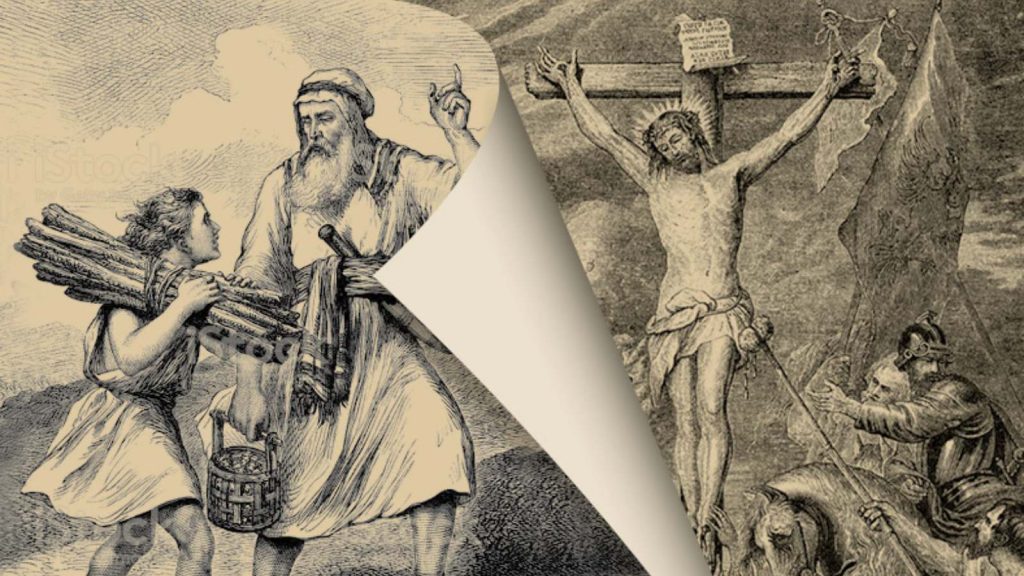
But then you have to remember Genesis 3:15 (“And I will put enmity between you and the woman, and between your offspring and hers; he will crush your head, and you will strike his heel.”) which tells us that God also set up this world in such a way that His Son (and therefore also Himself) was going to hang on a tree by nails in order to save us. So we can’t say that God is ducking any of the pain or that this is some kind of cruel joke or game He is playing because no rational person would set up such a wrenching game. In other words, God could identify with Abraham, and He can identify with us, just as we can with them.

And that truth got me thinking that perhaps the reason God had us do this particular lesson on this particular week was to identify with Abraham all the way through the story — not just in the sense of loss — but in order to affirm to us that Ethan was a precious gift to us, just as Isaac was to Abraham. For just as Isaac’s conception and birth were miracles, it also was a miracle that Ethan was born safely in that ambulance four years ago. As his only child, Abraham undoubtedly had spent a tremendous amount of time with Isaac before God gave this test to Abraham. We spent two priceless, brief months with Ethan, caring for him more intensely than any other baby we have had, up until the very moment he left us. But there is more to the parallel. Abraham was able to obey God’s command because Isaac’s life was a testimony to the facts that God always keeps His promises and that God does impossible things. According to Hebrews 11:19, Abraham in fact was clinging to the belief that Isaac would be raised from the dead, even though he had no concrete experience of such an event. But Abraham did know that God had demonstrated the power to create life from Sarah’s “dead” womb, and so Abraham firmly believed (because otherwise how could he ever have taken even the first step toward that mountain?) that even Isaac’s death could not hinder God from keeping His promises about Isaac and his offspring.

It is true that God endured the sacrifice of His Son while knowing that that Jesus was going to be raised from the dead, while Abraham had to rely on faith in carrying out God’s command to sacrifice Isaac. But that is precisely the point: we must come to understand that faith in God is as certain as actually knowing how it all ends. God commended and blessed Abraham, He preserved Isaac in the flesh, and He saved Abraham for eternity precisely because of Abraham’s indomitable faith in what was true: that God is a promise-keeper who does the impossible, including resurrection. Thus, to God knowing the answer is not as important as having faith in Him that there will be an answer.

Yes, this story of Abraham and Isaac is about how obedience to God may involve great sacrifice — though not more than God already has sacrificed for our salvation. But it is just as much about sustaining faith in God’s power of resurrection. So perhaps God was reassuring us on that particular week that His gift of Ethan to us was not in vain; we, like Abraham, can believe with confidence that we will see Ethan again because God ensured exactly that with none other than His own Son, who lives and is with Ethan at this very moment. Praise the Lord for His comforting truth in the midst of great sorrow!

Happy Fourth Birthday, Ethan!

Ethan’s Dad: It is late, but I cannot let the day pass without marking what should be our Little Caboose’s fourth birthday. His twin brother Noah had a good birthday, I think, filled with most of the things such a day should have for a child: special meals, an adventure with Mom, some cool presents, and visits from grandparents (both virtual and in person). Of course, those also are all things Ethan does not get to experience, and we, his family left in the Shadowlands, are so much the poorer for it. The joy we get to see from Noah is matched by the void left by Ethan’s absence.

And once again with these events that mark time we remain astonished in opposing ways that we have arrived at the twins’ fourth birthday because time both flies and crawls in this situation. It flies as we watch Noah, in the same way so many other parents do, grow like a weed throughout his precious childhood. It crawls as we miss Ethan, always yearning for that time when we will see him again. Time is indeed relative when you live with having twins but only one of them is still living with you on this earth.

I am ever thankful that we continue to get to see Noah’s joy. It is impossible to exaggerate the enormity of that blessing, one which I am painfully aware I would not recognize quite so well if it was not for Ethan’s absence. Yet, I am always heartbroken that we do not simultaneously get to see the same joy from Ethan, or the unique joy the boys certainly would have given to each other. Noah is now old enough to express to us — and often does— that he wishes Ethan would come back to us, and the sweetness of that unknowing longing evokes an inner ache that defies description.

My consolation — my hope — is that one day we are going to be able to sit down with Ethan and have a bunch of birthday parties in a row, or one party so stupendous that it somehow dwarfs these lost milestones. What will be his favorite party game, his choice of cake, his big present? I wonder as I wait for that jubilee which exceeds all earthly celebrations.

For now, we mark the time, we cherish Noah, and we cling to the promise that God is able to keep our Ethan, who we have entrusted to Him, until the day Christ returns. (2 Timothy 2:12). Our four-year-old who never reached four or three or two or one was celebrated and mourned this day. And so he will be until Kingdom Come.

Over and Underneath

Ethan’s Mom: This past weekend, I attended the (in)complete Retreat for moms who have experienced stillbirth and infant loss. The weekend consisted of group sessions with a certified counselor and Bible study with a leader who had attended the first of these retreats, held in 2016. My hope in attending was to connect with other women who know the pain of this loss firsthand, and I did, in fact, develop relationships which I think will last many years. But I was surprised to find out what a milestone this retreat would become on my journey.

I really didn’t realize how tired I had become – tired of pretending, tired of avoiding, tired of trying so hard to figure it out. The best picture I can give you of the change in my soul is an overtired child. When I arrived home Sunday, I was putting an overtired, no-nap 20 month old to sleep. This is not pretty, in fact, it is nearly impossible. No amount of rocking or shushing or calm reassurances of my love or his need for sleep made any difference. Eventually, into the bed he went, still wailing at maximum volume. After 30 minutes of throwing down in his crib, I went back in and asked if I could try rocking him again. This time, he did not fight me, and his anxiety lifted as I rocked. He stilled to my voice and seemed to accept that what he needed was to sleep. I didn’t put him in the bed as soon as he stopped gasping for breath between sobs. I held him until he was relaxed and ready to accept going to sleep. My love did not change one bit, and my actions were pretty similar both times I tried to put him to bed. He wasn’t able to accept my love in the same way he typically does at bedtime because his body and mind were so incredibly tired that it was affecting him deeply. Eventually, he hit bottom and looked to the person who had been there trying to help all along.

I have been an overtired toddler in the arms of God for many months now. Perhaps those of you who interact with me are surprised by this, but that is the best description for the angst that has built up inside of me, maybe mostly since the anniversary of Ethan’s death. It has felt like people have moved so far beyond this tragedy that anytime I tried to talk about Ethan or my grief, I felt like people became very uncomfortable. Well, if there is one thing I try to avoid, it is rocking the boat. Taking responsibility for how people reacted to my life and my loss was putting a tremendous strain on me. I was overwhelmed by the darkness — fighting and punching at air, trying to wrestle with what happened to my sweet baby, my family, and my faith — but I didn’t want any help. I didn’t want to invite anyone into the darkness with me.

There were many holy moments throughout the weekend, and some I will ponder in my own heart instead of sharing them on this blog. But I want to share a message I believe I received from God the Father through his Holy Spirit and the wise counsel of the retreat staff.

The Bible study leader and I were cut from the same perfectionistic cloth. Her journey contained battles with many of the things I had been struggling with. She encouraged us that we can stop wrestling with ourselves and start wrestling with God, inviting Him into our darkness. The enemy would have us fighting within ourselves instead of going to God with questions and doubts and turmoil. If he can keep us from bringing Him the negative feelings that are so hard to feel and harder still to express to other people, even the closest of friends or family, He can keep us away from the source of healing.

It sounds easy to bring everything to God, but it isn’t, at least for me. In the first few months after Ethan died, I remember telling Greg that people needed to stop telling me about the loving arms of Jesus. I did not feel surrounded by the loving arms of Jesus. I felt like I was in a choke-hold and that Jesus, if he was even really real, was a million miles away, coolly detached from my misery.

What I didn’t realize until this weekend is that I was stuck there. I have returned to church and Bible study, and I have watched as my husband’s cracked faith seemed to cement back into place. I have a completely new and deep gratefulness and longing for the return of Christ and the redemption of the world, but for the here and now, He seemed so far away. One day He will be my hero, defeat death, and restore me to Ethan, but until then, I’m just on my own down here in this crazy messed up world, fighting all the battles that wage inside of me. Grief has been the loneliest experience of my life.

Maybe it is easy to read that and think, “Oh, how misguided. What weak faith. Of course, God is always with us, He says so.” Beggin’ your pardon, but if you have never buried a child, you have no idea what it takes to choose every moment of every day to keep trusting in a loving God who could have saved your baby in a hundred different ways but did not.

That is the paradox. My really thoughtful and deep husband addressed this in a blog post already. I guess this is my version of coming to terms with this, a little later on.

The Bible study leader encouraged us to lean into the paradox, to wrestle with God, to “pour out your heart like water before the Lord’s presence” (Lamentations 2:19). And throughout the rest of my messy, tearful, heart wrenching prayers during the weekend, I started to lean in. He spoke to my heart in a non-saccharine, non-loving-arms-of-Jesus way that He was here, and even though I couldn’t even see or acknowledge Him, that He has been here all along. He told me that it was time to stop flailing and fighting His love, that it is real and near even though it hasn’t felt like that at all.

And in that revelation, I rested. My soul rested, just like my overtired bundle of sweat and tears fell asleep in my arms as I rocked and sang over him.

I do not mean to imply that I was “fixed” this weekend or that I don’t have sadness and doubt, longing and heartbreak, and all the other emotions that can weigh so heavily on those of us who walk through the valley of the shadow of death. But I do know in a way I didn’t before, that He is with me in the valley. His rod and staff comfort me. I believe He will give me provisional grace for this messy life and have decided to trust it from here on.

I want to share the lyrics to a song that describes what I am trying to express in this post.  Jesus loves you, always, and I am praying that you can rest in this truth today.

I hear You say
“My love is over, it’s underneath
It’s inside, it’s in between
The times you doubt me
When you can’t feel
The times that you question
“Is this for real?”
The times you’re broken
The times that you mend
The times you hate me
And the times that you bend
Well my love is over, it’s underneath
It’s inside, it’s in between
These times that you’re healing
And when your heart breaks
The times that you feel like you’ve fallen from grace
The times you’re hurting
The times that you heal
The times you go hungry and are tempted to steal
In times of confusion
In chaos and pain
I’m there in your sorrow under the weight of your shame
I’m there through your heartache
I’m there in the storm
My love I will keep you by my power alone
I don’t care where you’ve fallen or where you have been
I’ll never forsake you
My love never ends
It never ends.”

Visiting with a Shadow

Ethan’s Dad: I still visit regularly, usually three days a week. For the first full year, I visited nearly every single day. I know some people think it is strange that I would go to Ethan’s grave so often. I suppose in their minds it seems like it would be too painful to visit such a place over and over again. But it is extremely important to remember, when supporting friends, neighbors, or loved ones who have sustained losses, that people grieve in different ways and they need to be given the space to do so. What I do is no better or worse, no more normal or weirder than how my wife seeks to survive in the midst of her grief. She visits his grave as well, though not as often, but she journals, for instance, much more frequently than I have. We are each dealing with an unexpected absence, a weight that may tug on our hearts more heavily at some times than others, but that always remains with us wherever we go. Yet we are different people and so our methods of carrying the weight correspond with our own personalities. And so it is with all who carry burdens of loss.

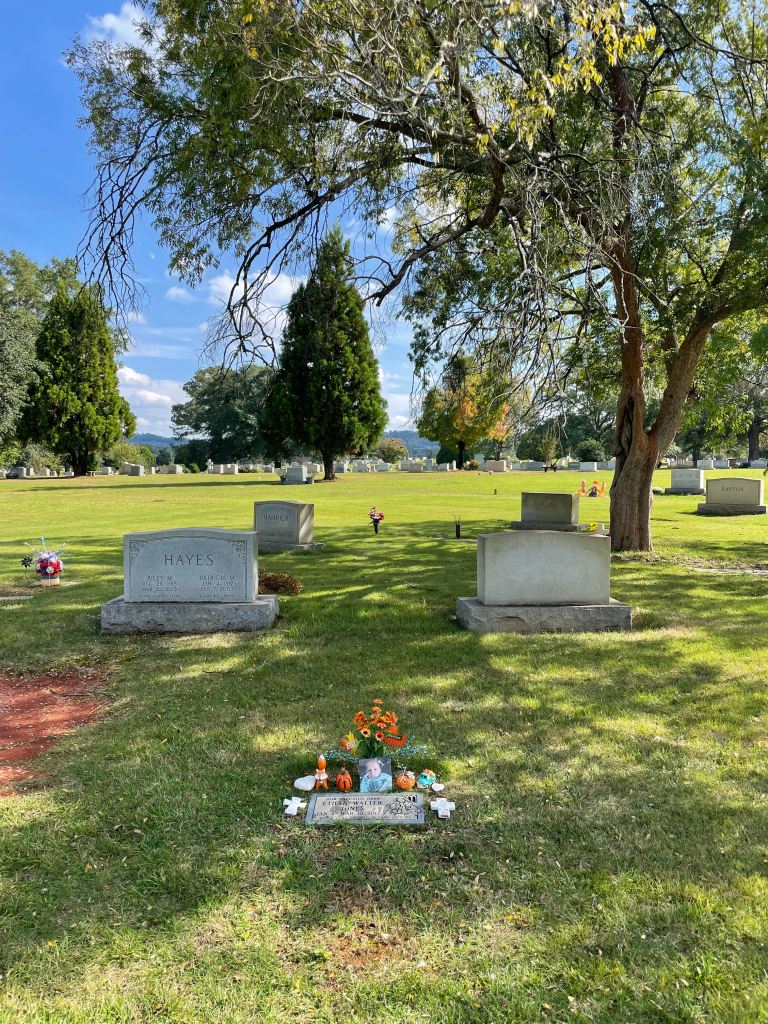
At first when I visited, I mostly talked to Ethan. I should clarify in mentioning this that it isn’t that I believe Ethan is there — at least not the part of him that matters most. My wife recently wrote a post about some of the awful day that was Ethan’s funeral. And while there was much that was unspeakably difficult about that particular day, one revelation for me occurred when we saw his little body in the tiny casket. We cried rivers of tears. We read letters to him that we placed in the casket. We hugged a lot. But one thing that was very apparent to me was that Ethan was not really there. His precious, frail body was there . . . but it was cold and impassive. . . the light of life was gone from it.

This is a difficult idea to put into words because it honestly can only be experienced, not exactly described, and yet it is not an experience I would wish for anyone. But in that tragic moment when you see your still baby who was so vibrant only a few days before, there comes this clear sense that something is truly amiss: You come face to face with the truth that a person is much more than just flesh and blood. People have spirits which make them who they truly are. The contrast between our real Ethan and what was left of him in that casket was so stark that this spiritual reality was undeniable. Our Ethan — the curious, quiet, lovable, strong, immaculately precious boy — is with the Lord. He is laughing now, rather than hurting, and waiting for us (though the wait will seem like nothing to him because time is nonexistent in heaven).

Alas, time is all too real to us, and to me it seems to go by much more slowly now than before Ethan’s passing. And so I choose to pass some of that time by sitting next to his grave. It is not the most vital part of him, but it is all we have left here in this in-between place we call the Shadowlands. It is my tangible connection to him. It is a place-holder until the joyous reunion.

Over time, my conversations with Ethan morphed into talking to God more often than talking to Ethan because He is my spiritual connection to Ethan. God is the reason a reunion will happen, made possible by Jesus’ sacrifice on the Cross. Jesus said He is “the Alpha and the Omega, the First and the Last, the Beginning and the End” — of all things. (Revelation 22:13). This means He is also the God of this off-kilter in-between time in which we find ourselves.

At times, walking in these shadows, it can seem as if He has abandoned us, left us to our own devices.

“I cried out to God for help;
I cried out to God to hear me.

“When I was in distress, I sought the Lord;
at night I stretched out untiring hands,
and I would not be comforted.

“I remembered you, God, and I groaned;
I meditated, and my spirit grew faint.”

(Psalm 77:1-3). In fact, that is one reason that at first I only talked to Ethan: Because I did not feel God there, all I felt was a black hole, a yawning abyss from which no light could emanate or escape.

But in the end, faith is not about feelings, it is about will, submission of the will really, but will nonetheless. And when you press on through the shadows you discover that there is light there after all.  (And how could it be otherwise?  For shadows are only seen because of the light that illuminates reality). The light is not a bolt that thunders, at least not for me, but a flicker that whispers your name and tells you to keep listening. And so the conversations become less and less audible and more and more reflections pouring over the Bible, His words that come alive because of His Spirit communing with our own when we seek Him.

I don’t mean for it to sound like magic. It is not. There is no trick and this is not fantasy land. I do not live in a state of Zen or blessedness or higher consciousness or whatever else some beliefs choose to call their willful blindness toward the tragedies of life. Nor do I mean to sound super-spiritual, for the contemplation is born from desperation, not holiness. I am weak. I am hurt. I still feel out of sorts. I still cry because of this inexplicable loss that neither Ethan nor we deserved to experience.

And so I sit next to the place where Ethan’s little body resides. I sit still in the quiet (there are few places quieter than a large cemetery).  And in that stillness I know that God is there (Psalm 46:10), and I dare to trust that Ethan is with Him, waiting. My heart yearns: Come quickly, Lord Jesus, Come. (Revelation 22:20).

Carrying a Weight No One Should Have to Bear

IMG_3479

Ethan’s Mom: Jones kid #4 and I started going on walks after school resumed this fall. #3 is off to preschool MWF. The big two are already at school, and it leaves just me and the little bear on our own. These walks have been good for us both, I think. I started walking this summer as a means of burning off anxious energy and getting out of the house after long summer days with everyone at home. We had a super fun summer, but this girl needs a little quiet in her life to function well. So I would strap on the tennis shoes and head out the door as soon as the lights went out. I started using this uninterrupted time to listen to a new podcast, “The Joyful Mourning,” produced by Ashlee Profitt, founder of the Joyful Morning an online community group for Christian women who have experienced miscarriage, stillbirth, or infant loss. I continue to save it for my walks even after changing to daytime strolls, and I look forward every Wednesday to a new installment. I have listened to Ashlee chat with her husband, her best friend, fellow mommas, and a Biblical counselor about topics with which I am all too familiar. Every episode, I find myself walking along and talking to myself like a crazy woman – “Oh me too. That is totally right. Yes, amen sister.”

Today’s episode dealt with planning a memorial service or funeral for your baby. I almost didn’t listen to it. Wednesday March 15th was the day of Ethan’s funeral. It was bitterly cold for mid-March, but bright and sunny. The days between the 10th and the 15th were full of so, so many horrible moments. No parents should be making the choices we were forced to make, but at the same time, Greg and I wanted to be the ones making them. I am a naturally indecisive person about most things, but every decision made at the funeral home, cemetery, florist, and the meeting with our ministers to plan the service seemed very clear cut to me. I don’t know if I wanted to make them fast just to get them over with, or if I knew somehow (I never would have been able to articulate this at the time) that only a baby’s parents would know him well enough to plan a meaningful send -off and that Ethan deserved our best efforts in caring for him in this way.

I guess maybe I started listening to find out if we did everything “right,” even though I know there is no right and wrong in this. I found myself going through a whole range of memories and emotions as she addressed some of the issues surrounding planning a memorial service: gratefulness for the people that were agents of His grace in the worst of places and family that fully supported us without taking over decisions that needed to be ours, bittersweet memories of the soft polka dotted gown that all of Ethan’s brothers wore before it became his burial clothes, the tension between wanting to look like a woman that Ethan would be proud to call his mother and not caring at all what I wore to the funeral, the relief that we would have a written copy of the beautiful eulogies spoken at the service.

But twice in the podcast, I stopped in my tracks and caught my breath as tears fell suddenly down my cheeks.

The first was when Ashlee said that if you choose to have your child buried, you will need to select pallbearers and what a sacred job this is. When we first met with the funeral director, he said that some fathers in this situation choose to carry the casket to its final resting place. Greg immediately knew this was something he had to do. To be honest, I wasn’t sure about the plan at first. But he was certain – I knew that determined look on his face and knew better than to attempt further discussion.

When that terrible, surreal moment came to transport him to the cemetery, someone had to carry the casket to the hearse. It was too much to ask Greg to carry what had to be the heaviest load of his entire life twice, so we asked his brother to do this for us. When I heard the word “pallbearer” on the podcast, I immediately thought of my brother-in-law carefully carrying that tiny white casket from the dim light of the funeral home into the bright sunlight and brisk air and placing it into the back of the hearse. I have never been able to say thank you. I know you are reading this, J., so please know how much I appreciate you caring for Ethan, your brother, and me in such a personal and powerful way.

I composed myself there in the middle of Park Avenue and continued walking until this:
“My last thought dear friend, is to have someone take photos and video. It may be a long, long time before you look at those, if ever, but one day you might want to remember all those special details you planned. And the pretty new dress you wore. And how handsome and brave and strong your husband looked while reading the letter he wrote to your baby boy. And all the friends and family who came to mourn death and celebrate life with you.”

I couldn’t walk another step. Because my husband did carry Ethan from the hearse to the graveside, just as he said he would. I have never, will never, be more proud of him. I cannot imagine loving him more. In that moment, he was everything, everything that a woman’s heart yearns for in a husband. I could not have lifted that tiny white box to save my life, but he would not let anyone else carry Ethan that very last time. As he laid the casket on the platform so gingerly, I could see the anguish on his face. His heart was shattered, but his hands were steady and his arms were strong.

My brother did take photographs for us, and I am glad this moment is captured for a few other very special people to see as clearly as I will always see it in my mind. When our boys grow up and want to know what it is to be a man, I will show them this picture of their father, literally carrying the weight of the entire world to care for and protect his son and his wife. When my daughter brings home a boyfriend (I can hardly type that sentence), I will measure each suitor against her father and nothing less will be good enough.

He is not going to want to put this on the blog. He does not want your admiration or your praise. But if this blog is about our journey walking through the shadowlands together, this entry belongs on it. Just like any marriage, ours has moments of conflict and miscommunication, possibly even more so as we navigate the stormy waters of grief. There are times when he drives me crazy, but I can assure you the man who carried my sweet Ethan on that cold, sunny March day is the man I will trust and love forever.