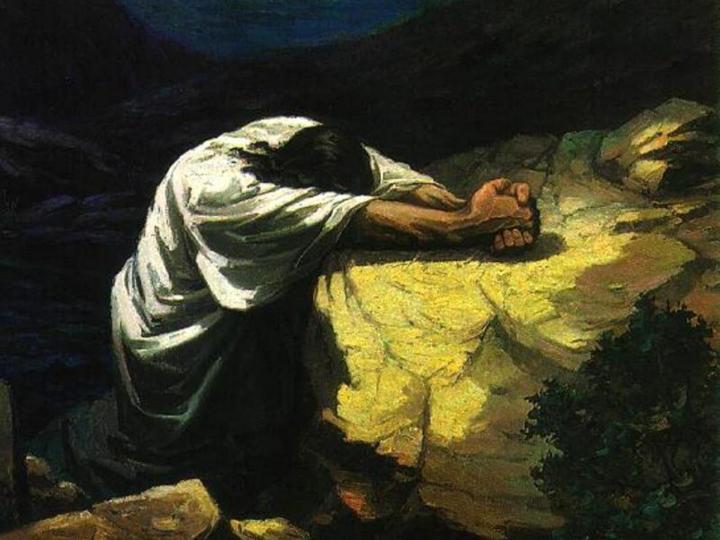
A Perpetual Saturday

Ethan’s Dad: I never really gave much thought to that Saturday. It wasn’t that I was flippant about it or that I purposefully ignored it. It was just that, in the Christian tradition I grew up in (and I think most others), all of the focus is placed on Good Friday and Easter Sunday. In many ways this is perfectly understandable.

Good Friday is the cataclysmic crisis point in which everything comes crashing down, the unthinkable occurs, and abject evil appears to win. For Christians that day is the definition of the ultimate sacrifice by the only One capable of making it for our sins.

In the starkest of contrasts, Easter Sunday is the glorious climax, the triumph, the grandest of all happy endings. It is the impossible of resurrection from the dead occurring, and yet it was simultaneously inevitable if Jesus was who He said He was because death could not hold onto the Author of life. For Christians that day means a new and ultimately eternal life with God.

So it is little wonder that Saturday is overlooked or even forgotten as it bridges these two profound and all-important days. But you don’t traverse a chasm without a bridge, so it is a required part of the journey, and — I have come to realize — it is more precarious than at first it might seem to be.

Can you imagine for a moment what that day must have been like for Mary, the Disciples, and others close to Jesus? Jesus had completely changed their lives: shown them miraculous signs reminiscent of wonders spoken about by ancestors of old, opened the doors of love beyond their previous comprehension, given them a brand-new purpose for life, and offered a hope unlike any they had ever known before. He had promised them an eternity with Him.

And then it all came to a sudden and sickening end in the span of one dark day. It must have been extremely confusing for them to watch Jesus be arrested, let alone witness Him beaten, then offered to the crowds, and then crucified like a common criminal. Everything they had known, believed, and hoped was instantly shattered beyond all recognition the moment Jesus breathed His last on that cross. It had to seem almost surreal, like it had to be a nightmare that they would surely awake from at any minute.

But when Saturday dawned, the darkness was still there, and it was, if anything, more oppressive. The sheer intensity of the trauma from the previous day was replaced by the stark void of the loss. Jesus really was not there. His leadership, assurance, and love were gone. More immediately, His presence was missing. And somehow they had to go on.

Remember that they did not know what would happen on Sunday. Jesus had tried to tell them, of course, but they just couldn’t understand it. Honestly, in a way you can’t blame them. It was all unlike anything that had ever happened before. Granted, as I have said, they had witnessed Jesus precipitate several miraculous events on a smaller scale: feeding thousands with almost no food, calming raging seas and walking on water, raising Lazarus after he had been in a tomb for 4 days. But this time they had watched Him die. And not just any death, but the most gruesome devised by the Roman Empire. It had to feel devastating, bewildering, hopeless. Surely they just wanted to crawl into a shell and never come out.

So they waited . . . and wondered. What was there left to do? How do you hold onto faith when everything you believed is turned upside down? How do you maintain hope when you watch it breathe it’s final breath? How do you continue to love when what illuminates that love is buried in a tomb? The questions are endless and the answers are elusive; they feel out there, yet not accessible. That Saturday they lived in a kind of netherworld — not really dead, but not capable of fully living either.

“So they took His body down
The man who said He was the resurrection and the life
Was lifeless on the ground now
The sky was red His blood along the blade of night

“And as the Sabbath fell they shrouded Him in linen
They dressed Him like a wound
The rich man and the women
They laid Him in the tomb

“….

“So they laid their hopes away
They buried all their dreams
About the Kingdom He proclaimed
And they sealed them in the grave
As a holy silence fell on all Jerusalem”

-Andrew Peterson (God Rested)

If you haven’t already guessed it, the reason for this rumination (other than the fact that it is Easter weekend) is because for my wife and I it feels as if we are living every day in something like that Saturday. You see, on one level, the day of a tragic event is the hardest because the vividness of its devastation haunts you over and over again. But in another sense, the day after is almost harder. At the time, the day of the event seems surreal, like it can’t be happening, like you are watching it from the outside as it unfolds. But the day after the horror, the reality hits you because the frantic energy of the moment is no longer there, and a person you love gone. The stark realization of permanent absence desolates your soul and you can hardly breathe, let alone dare to believe that one day the chasm of that loss will disappear and you will be reunited again.

An irreplaceable presence, our Ethan, is missing from our lives every day. It is an absence we did not ask for or expect. And that absence stretches on, with each new day bringing an ache and unsettledness that never quite subsides. When we say we are “Walking in the Shadowlands,” this is, in large part, what we mean.

An undeniable fact about that Saturday long ago is that God knew what it would be like for those close to Jesus after He was crucified.  God knew about the pain, confusion, and uncertainty, and yet He did not break through the silence to give them reassurance. He let then wait until Sunday to see the answer for themselves. I think it is worth asking: Why did God allow them to endure that Saturday?

The most immediate answer is that He knew everything would be made right again on Sunday. But what if it was more than that? Suppose that the waiting, with all of its attendant anguish, bewilderment, and doubt, was a necessary part of the process for the revelation of the Resurrection.  Would the Disciples have fully grasped the implications of the Resurrection without experiencing what life would be without Jesus’ presence?

Of course, Christians today know how the whole story unfolded, so it is harder to grasp what the loss of Jesus must have felt like on that Saturday.  But we do experience personal losses, sometimes profound ones.  And sometimes, when there is a loss that is wretchingly dear, God asks us to wait the rest of our earthly lives — to trust Him in the midst of the daggers of pain and whirlwinds of questions — until we come to the end of that seemingly perpetual Saturday and see that the loss will be made whole.

For me, then, there is a strange comfort in the fact that dark Saturdays are not alien to Christianity; they are, in fact, apparently somehow integral to it.  It does not lessen Ethan’s loss for me, but it does show me that God knows what I am feeling, and the fact that He has let me experience it is not proof that He is not there, as some would tell you.  Instead, the loss of that precious boy, and the restless unease that accompanies it, imparts a little more understanding of what life would mean without Jesus, without His death, burial, and resurrection.  So, I will keep walking in the shadows and looking forward to dawning of that Sunday when

“the Lord Himself will descend from heaven with a shout, with the voice of the archangel and with the trumpet of God, and the dead in Christ will rise first. Then we who are alive and remain will be caught up together with them in the clouds to meet the Lord in the air, and so we shall always be with the Lord.” (1 Thessalonians 4:16-17).


 

Planting Seeds

SERVICE_BERRY_TREE

Ethan’s Mom: Two years ago today (March 15th), I buried my son.

There have been so many hard memories floating to the front of my mind this week. Many of them are of dark and terrifying moments. A few from today were moments of grace and beauty in the midst of extreme tragedy. The day of the funeral dawned bright and clear. It was an unseasonably cold day but the sun was shining brightly, and I was so grateful it wasn’t raining or gloomy as it had been the preceding days.

Today was another sunny March day, only it was about 20 degrees warmer. It was a great day to be out in the backyard, and the kids and I ended up doing a spur of the moment gardening project. I have been fascinated by gardens ever since two special friends from church made an “Ethan Garden” for us. They took an overgrown, messy garden bed in our backyard and transformed it into an abstract heart shaped area that includes the hydrangea and calla lilies that our parents sent to the funeral home. Last fall, I made my first attempt at growing something back there, and a few weeks ago, sunny yellow daffodils started peeking out from around the perimeter. I look out the back windows countless times a day to gaze at my cheery buttercups.

Today was less about the anticipated results and more about the act of digging, clearing, and planting connecting me to the bigger picture. I don’t know what kind of blooms we will see from the wildflower mix purchased from the dollar store, but I know preparing the soil and planting the seeds was what my heart needed to do today.

The three bigger kids helped me clear out and till up a patch of earth back under their little treehouse platform. We dug and pulled weeds but we also found a few “creatures” as my daughter kept calling them. We sprinkled seeds and talked about how they would grow into flowers. We watered them in while talking about what kind of butterflies we might see, as the box assured us that the included flowers are favorites among butterflies.

The daffodils and the wildflower seeds brought to mind this sweet hymn that I learned in college. Who knew the words would become so meaningful to me almost 20 years later?

In the bulb there is a flower;
in the seed, an apple tree;
in cocoons, a hidden promise:
butterflies will soon be free!
In the cold and snow of winter
there’s a spring that waits to be,
unrevealed until its season,
something God alone can see.

There’s a song in every silence,
seeking word and melody;
there’s a dawn in every darkness
bringing hope to you and me.
From the past will come the future;
what it holds, a mystery,
unrevealed until its season,
something God alone can see.

In our end is our beginning;
in our time, infinity;
in our doubt there is believing;
in our life, eternity.
In our death, a resurrection;
at the last, a victory,
unrevealed until its season,
something God alone can see.
(Hymn of Promise, Natalie Sleeth)

Gardens are places where the veil is thin, and we can see beautiful imagery of incomprehensible truths. When you start seeing signs of new life burst forth this spring, I hope you will join me in marveling at nature’s foreshadowing of the coming joy when “up from the earth, the dead will rise like spring trees clothed in petals of white…and we will always be, always be, always be with the Lord.” (Remember Me, Andrew Peterson)

Come Lord Jesus.

Two Years

IMG_4879

“There isn’t any good way to start writing about this. My son is dead. I can write that as a definitive statement but it doesn’t feel like that. It really feels like he is just staying somewhere else for a moment and we will go pick him up. But, of course, we would never do that with a two-month old. We would keep him close; watch his every move; hold him over and over. And then there is the fact that I saw him on that table in the hospital laying still. And then I saw him in that tiny coffin at the funeral home. Those are images I am certain I will never forget.

“….

“This was the worst day of my life. It will always be the worst day of my life. I will never forget it. I will never be whole from it. I will never understand it. My baby, my little caboose, my Ethan, is gone. And my single hope is that one day I will see him again. I will live the rest of my years waiting for that day.”

Ethan’s Dad: Those were the first and last paragraphs of my first written expression about Ethan that I wrote two years ago, soon after he died.  I will not share the rest of that writing because it is too personal, too raw — too much even for this space. But for me those first and last paragraphs are fitting on this day — this day that marks two years from the moment Ethan left us. They are fitting because no matter how much has changed over the past two years, those thoughts remain the same.

Much has changed. I no longer always feel cold or desolate or listless. I now see Ethan’s mom smile when his twin brother does something amusing. I still sit beside his grave, but not with the feeling that the whole world could be rushing past and I won’t care because there is nothing else of importance to do. That dagger in my heart pokes intermittently rather than slicing with incessant fury.

And yet . . . and yet every now and then it still seems to me as if Ethan is just staying somewhere else overnight and we will wake up and see him in the morning. I still long to hold him. I still remember him lying on that metal table, unmoving.  I still remember the awful coffin and a quiet that shattered our world. I still know it to be the absolute worst day of my life, even amidst the experiences of other days of profound fear and heaviness.

This is not a day of celebration. It is not a day of fond farewells and whimsical dreams. It is a day of darkness, a day of mourning, a day of counting an immeasurable loss. It is a day I would never wish upon anyone in all the world, no matter how otherwise evil a person may be, and yet I know all too well it is unfortunately shared by many who also have lost a child, perhaps by some reading these very words.

To you all I can say is that I also still have that single hope — actually stronger now than when I wrote those words two years ago — a hope that I will see Ethan again because of the One seated on the throne who says “Behold, I make all things new!” (Revelation 21:5)

I will not pretend that this hope makes it all better here and now. It does not. This day is still excruciating. This is a loss I still cannot fully fathom. My life, my entire family’s life, will always be different — be less — than what it was to be with Ethan among us. I cannot comprehend how God will rectify such an absence. All I know is that He promises that He will.  This is why Jesus came:

“To proclaim freedom for the captives,
to release prisoners from the darkness,
to proclaim the year of the Lord’s favor
and the day of vengeance of our God.

To comfort all who mourn,
and provide for those who grieve in Zion—

“To bestow on them a crown of beauty
instead of ashes,
the oil of joy
instead of mourning,
and a garment of praise
instead of a spirit of despair.

“They will be called oaks of righteousness,
a planting of the Lord
for the display of his splendor.” (Isaiah 61:1-3)

The Silence of God

GethsemaneEthan’s Dad: “Silence is golden.” Except when it’s not. You might think that when there are four children 8 years of age and under running around you, you have more than enough noise, and you long for quiet. But when you know there is a voice missing, jabbering from another two year-old that you should be hearing in the din, the chaos isn’t enough. Instead what you hear is a sound of silence that pierces your soul.

As Ethan’s mom hinted at in her last post, lately I also have been thinking about another kind of silence: the silence of God.

“It’s enough to drive a man crazy; it’ll break a man’s faith
It’s enough to make him wonder if he’s ever been sane
When he’s bleating for comfort from Thy staff and Thy rod
And the heaven’s only answer is the silence of God.”

-Andrew Peterson (The Silence of God)

There seems to be an impression among some Christians that God is only silent when we are distant from Him. That is to say, the only times we don’t hear from God are when we are enmeshed in deliberate sin or when we don’t like the answer we are getting about a request we have made to God. But this is, at best, only a half-truth.

To begin with, unless you are so distant from God that your conscience is dulled, the fact is that a Christian does hear from God quite loudly in the midst of deliberate sin. God lets us know in no uncertain terms that what we are doing is wrong. That’s why it is a deliberate sin. And if we don’t like what God is telling us when we ask for something, then He isn’t actually being silent, is He?

But I think in a way what these Christians are really saying is that God is never actually silent; we are just turning a deaf ear to Him. Now, this might sound like good theology to you, but as well-meaning as it may be, it is flat wrong. The silence of God is a very a real and agonizing experience for believers the world over.

“It’ll shake a man’s timbers when he loses his heart
When he has to remember what broke him apart
This yoke may be easy, but this burden is not
When the crying fields are frozen by the silence of God.”

Moreover, the Bible does not shy away from this fact.

Job suffered with excruciating pain and loss for a stretch of time before God spoke to Him, and even when God broke the silence He did not fully explain to Job all of the reasons for his suffering. (See Job 38-41).  When Shadrach, Meshach and Abednego were sentenced to die in the fiery furnace, Scripture records that the three of them stated that “even if [God] does not [save us from the blazing furnace], we want you to know, Your Majesty, that we will not serve your gods or worship the image of gold you have set up.” (Daniel 3:18). The clear implication is that the three men were not told by God beforehand what would happen to them when they were thrown into the fire. In the period of time between the Old and New Testaments, the people of Israel lived for over 400 years without any revelation from God about their salvation through a Messiah. John the Baptist passed time in prison under Herod without hearing anything from God as to whether his ministry had made any real difference. Finally John — in apparent desperation — sent some of his followers to Jesus to ask Him whether He really was the Messiah. (See Matthew 11:2). The Disciples spent the Saturday after Jesus’ death in despondency and silence (a period worth pondering in a future post).

Are we to write off all of these people’s recorded experiences as false impressions about God? If those examples are not enough, how about Jesus himself, who exclaimed from the cross: “My God my God, why have You forsaken me?” (Matthew 27:46).

“Oh,” you say, “that was different because Jesus was taking on the sin of the world in that moment. God had to turn away. The same is not true for us.” But I think Jesus’ question was expressing the culmination of His entire experience during the crucifixion. It’s likely that God’s silence started the moment Jesus was led away from the Garden of Gethsemane by the Sanhedrin’s guards. Jesus came to earth and experienced what we experience. Did He bear more pain that we ever will or could during the crucifixion? Absolutely. But Jesus’ experience with the silence of God — perhaps more than anything else could — reflected His humanity.

“And the man of all sorrows, he never forgot
What sorrow is carried by the hearts that he bought
So when the questions dissolve into the silence of God
The aching may remain, but the breaking does not
In the holy, lonesome echo of the silence of God.”

In asking this question — “My God, my God, why have You forsaken me?” — Jesus echoed the words of David as recorded in Psalm 22. So David too experienced this silence. And, in fact, the Psalms are full of reflections on the silence of God. For instance, David in Psalm 13 inquires:

“How long, Lord? Will you forget me forever?
How long will you hide your face from me?
How long must I wrestle with my thoughts
and day after day have sorrow in my heart?
How long will my enemy triumph over me?

“Look on me and answer, Lord my God.
Give light to my eyes, or I will sleep in death,
and my enemy will say, ‘I have overcome him,’
and my foes will rejoice when I fall.”

Psalm 42, the beginning of which is often (and I believe wrongly) quoted in a happy fashion, says:

“As the deer pants for streams of water,
so my soul pants for you, my God.
My soul thirsts for God, for the living God.
When can I go and meet with God?
My tears have been my food
day and night,
while people say to me all day long,
‘Where is your God?'”

Psalm 77, which to me is one of the best passages in all of Scripture, pulls no punches:

“I cried out to God for help;
I cried out to God to hear me.
When I was in distress, I sought the Lord;
at night I stretched out untiring hands,
and I would not be comforted.

“I remembered you, God, and I groaned;
I meditated, and my spirit grew faint.
You kept my eyes from closing;
I was too troubled to speak.
I thought about the former days,
the years of long ago;
I remembered my songs in the night.
My heart meditated and my spirit asked:

“‘Will the Lord reject forever?
Will he never show his favor again?
Has his unfailing love vanished forever?
Has his promise failed for all time?
Has God forgotten to be merciful?
Has he in anger withheld his compassion?'”

And then there is Psalm 88, which is perhaps the most depressing expression of God’s silence in all of Scripture. It contains lines such as:

“You have put me in the lowest pit,
in the darkest depths.
Your wrath lies heavily on me;
you have overwhelmed me with all your waves.

“….

“I call to you, Lord, every day;
I spread out my hands to you.
Do you show your wonders to the dead?
Do their spirits rise up and praise you?
“Is your love declared in the grave,
your faithfulness in Destruction?
Are your wonders known in the place of darkness,
or your righteous deeds in the land of oblivion?

“But I cry to you for help, Lord;
in the morning my prayer comes before you.
Why, Lord, do you reject me
and hide your face from me?”

Why would God include these expressions of anguish in Scripture if the experiences were not real, and, perhaps more importantly, appropriate? God does not shy away from His silence, so why should we? The expressions of silence are there often enough that we are almost forced to face the prospect that the silence is purposeful. So why would God sometimes choose to be silent in our most painful moments, the very moments when you would think we need Him the most?

When we ask the question “why did this happen?” what we really mean is: Why weren’t You there, God? Why didn’t You stop it? Isn’t that, in part, what is behind Jesus’ haunting question: “My God, my God, why have You forsaken me?”

Yet, so often when we ask that question, what follows is silence. In our case, we screamed the question, over and over: Why did Ethan die? Why did you not tell us earlier that he wasn’t breathing? Why didn’t you stop this? Why couldn’t the paramedics save him? Why didn’t you bring Ethan back, like you did the son of the widow of Zarephath (1 Kings 17-7-24), the son of the widow of Nain (Luke 7:11-17), Jairus’s daughter (Luke 8:40-42, 49-56), and Lazarus (John 11:1-44). We received no answer, no comfort, no reassurance. Just cold, dark, silence.

It has taken me a while to realize, as I indicated above, that perhaps this silence was intentional. In fact, I think the “Why” questions might be important not so much because of answers you hope to receive, but instead precisely because they are accompanied by silence. It does not seem so at the time, but if God is not going to supernaturally intervene, then silence is really the only appropriate response in a horrific moment like that because there is no answer that will satisfy other than “I will give you your son back.” Yet God has already chosen, for whatever reason, not to provide the satisfying answer. And He is no fool. God knows that when that is the case, the response from His child will be anger, disappointment, confusion, and despair. The truth is, in that God-forsaken moment — and for a while afterward — if His answer was not “I will save Ethan,” I did not want to hear from God and He knew it.

I think that the silence occurs because the answer to “Why?” will not satisfy if it does not include an immediate fix to the brokenness. And when you sit in the silence what you start to realize is that God is not who you thought He was. This may sound like a negative thing, but that is only the case if you think you have God figured out. And if you think that, then your God is too small because He fits into your finite mind. He stretches far beyond that.

“‘For my thoughts are not your thoughts,
neither are your ways my ways,’
declares the Lord.
“‘As the heavens are higher than the earth,
so are my ways higher than your ways
and my thoughts than your thoughts.'” (Isaiah 55:8-9)

The unvarnished truth is that God is a lot more concerned with how we answer the “Who” questions of life than He is with answering our “Why” questions. For one inquiring mind, Jesus answered the question: “Who is my neighbor?” (Luke 10:29-37). The answer is: everyone. On another occasion, Jesus asked His Disciples: “Who do you say that I am?” And Jesus approved Peter’s answer: “You are the Christ, the Son of the Living God.” (Matthew 16:15-17).

And in the silence of God, this last question is the most important question of all: when your world comes crashing down around you, when the unthinkable tragedy is your reality, when you weep until you have no strength to weep anymore (1 Samuel 30:4), who do you say Jesus is? If He is just some friend or spiritual mentor or great teacher, He is useless in that moment. But if He is who Peter said He was, then He makes all the difference in the world.

Because that person, that Savior, cares for you beyond all measure and He proved it by dying for you. He didn’t just tell us He loves us, He demonstrated it in the most agonizing way conceivable to our finite minds, by dying on an instrument of torture. And beyond that, if He is who Peter said He was, then Jesus isn’t even just some martyr who died a horrible death in our place. He is alive, meaning He overcame death, and He is capable of extending, and eager to offer, that same gift to us — and to our little ones whose lives were so tragically cut short.

This is what real faith is about: it is about foregoing the “Why” based on the “Who.” If we can accept that, then we can keep on living — if not in complete peace — then at least in genuine hope. “And this hope will not disappoint us, because God’s love has been poured out in our hearts through the Holy Spirit who God has given to us.” (Romans 5:5).

Some Lessons from the Book of Ruth

Ethan’s Mom: Confession – two weeks ago when I saw that our next Bible Study Fellowship unit was on Ruth, I was not super excited. Great, I thought. This is just a love story where everything works out for everyone, nothing like my life. Turns out, I had a lot to learn from this not-so-easy love story. So much, in fact, that not only was it the focus of BSF, it was also a focal point of a book I was reading with a small group of intergenerational ladies at church. It seems God really wanted me to pay attention to these folks, and I think I can see why.

For starters, let’s all take a moment to acknowledge that Naomi is not just a supporting actress in this drama. There is so much that Ruth’s mother-in-law and their relationship can teach us. I had not really paid close attention to her before, but then again, I had never identified with her grief before March 2017. First, she went to a foreign land with her husband and sons. Then her husband dies, and years later both boys marry and then they die as well. I think in order to familiarize modern readers with the cultural challenges that Naomi faced, the message that comes through most loudly is that Naomi was in a pickle because she had no income or that she was in despair because she was going to go hungry. No doubt the financial woes and uncertainty were a huge stresser, but that is not the whole story. She is grieving the loss of THREE people in her immediate family. The only three people in her immediate family. For the sake of argument, let’s assume she and Elimelech had an arranged marriage and maybe his death didn’t break her heart. Maybe she was so mad at him for moving the family to Moab that she felt like she lost her meal ticket but not her happiness. You can’t tell me, though, that she wasn’t torn to pieces over losing her sons. One of the sweetest relationships that has developed since our loss is my friendship with an older lady at church whose adult son died unexpectedly. The loss of an adult child may be different in some ways than losing an infant, but there is deep, unrelenting grief in both situations. That makes me feel like I can identify with Naomi in a way I never really identified with Ruth.

For instance, it may sound a little melodramatic when Naomi arrives back in Israel and demands that people call her “Mara, for the Almighty has dealt very bitterly with me.” (Rule 1:20).  Here she is, rolling back into her old neighborhood, seeing people she hasn’t seen in more than 10 years. There was no post office, much less Instagram. I’m thinking no one knows what has befallen her. She is likely telling the story over and over as she sees more and more people who inquire after her family or want to be introduced to this foreign woman she has with her. She is likely finding out that some of her old friends have bucket loads of grandchildren and are totally set for life. She has made a long, arduous journey with plenty of time to reflect on her situation and wishes that her husband or sons were travelling with her. I don’t blame her a bit for saying “I went away full, and the Lord has brought me back empty.” This is not a suck-it-up-buttercup kind of a moment; this is understandable anguish.

Do you know what is missing after this little pity party? A rebuke. Thanks to my husband for pointing that out to me. Naomi may not be theologically on target, but she’s being honest. This says to me that God can handle honest, even bitter honest, maybe even especially bitter honest. The important thing is not what she said when overwhelmed with sorrow when her arrival caused a “stirring” among the women in her old neighborhood. The important thing is that she had made the decision in Ruth 1:7 to “set out on the road that would take (her) back to the land of Judah.” She made the decision to move towards God in the midst of her fear and depression. It didn’t erase her pain immediately, but she was moving, one step at a time, toward the one who could bring redemption to her terrible circumstances.

Redemption. It’s a huge theme in the book of Ruth. It’s a huge theme in our lives walking in the shadowlands. Aside from the foreshadowing of Jesus as our kinsman-redeemer and all the beauty that entails, the story has moments where the tragic circumstances of Naomi and Ruth are redeemed by Boaz’s actions.

If there is one thing that parents whose babies have died want, it is for their loss to be redeemed in some way. There are bereaved mothers who have launched non-profits, written books, organized fundraisers or remembrance walks, etc., etc. We desperately want something good to come out of this because ultimately that gives us a way to share our little one’s life and legacy with others.

Side note: This is NOT the same as finding a reason for the tragedy – do not tell me that Ethan died so that this or that would happen. He is not just a pawn in God’s big chess game, and all the promises in the Bible that I can claim apply to him, too. That’s a whole other post, one that is probably better suited for my husband to analyze in this space.

Anyway, I have struggled with this thought since a few months after Ethan’s death. I have had ideas on how I can honor his memory, but nothing seems big or important enough to qualify as redemption, except things that seem impossible. I felt like God was saying to me through the study of Ruth that it is not up to me to do the redeeming. That’s His job.

Ruth has left her homeland and her family of origin after losing her husband. She lost so much. There is no reason to believe that she and Naomi were walking up the incline to Bethlehem talking about how great they were going to have it once they arrived. I’m quite sure they weren’t discussing how they might fit into the lineage of the Messiah. They were just doing what they felt was right in going back to the Promised Land and to the one true God. When they arrive, Ruth says she will go out and work for their food, and that’s just what she did. She went out and gleaned in Boaz’s field. Nothing glamorous, but she worked so hard on the task at hand that Boaz took notice of her work ethic and her devotion to Naomi.

God took her day-in-and-day-out obedience in the most mundane task, and out of that He brought redemption to Ruth’s life, Naomi’s life, the nation of Israel, and ultimately all humanity. I felt like He was pressing upon my heart that He wants my day-in-day-out obedience in the mundane tasks of mothering my four children on earth, loving my husband, and pouring into relationships with friends and family. Out of that work I have set before me, He will set into motion a plan to bring redemption in this lifetime to our loss, our pain, and our grief.

The story ends with Ruth and Boaz’s son, Obed, sitting in Naomi’s lap. Don’t you know that woman loved her grandson something fierce? I just imagine them having the sweetest relationship. She and Ruth must have just stared into his squishy baby face and delighted in counting his fingers and toes. They must have marveled at their miracle baby as he learned to talk and walk. That would have been such a blessing on its own, but then we find out that Obed has a son named Jesse. Jesse has a son named David, who becomes the king of Israel and a man after God’s own heart. From David, the lineage goes straight down to Jesus. There is so much more redemption coming than Ruth or Naomi could ever have imagined, and they don’t even see it in their lifetimes. Even the possibility that God can do more with our situation than we could plan, even more than we can imagine, gives me such hope. Now I am going to bed in preparation for another day of gleaning tomorrow, and I will rest in the freedom that the rest of our story is in much better hands than mine.