Entering In

Ethan’s Mom: “What is some of the deepest suffering you have experienced, and how did you cope through it?”

Those words have been staring me down this week.  The question is number 4 in this week’s BSF lesson, entitled “Perseverance in Suffering.”  There is about an inch of white space underneath in which to write an answer.  Who among us can describe their suffering and coping strategies in that much room?

After five days of sitting down to work on my lesson only to walk away after a few minutes of staring at it, I have finally come up with an answer:

“See blog.”  

Since the inception of this blog, it has been a safe place to process our thoughts about suffering, grief, and loss.  The loss of Ethan, primarily, but also the myriad of secondary losses we experience as a result.   I don’t know that anyone out there reads this consistently or anticipates hearing from us, but that’s OK.  We have viewed the blog first and foremost as an outlet for us.  It is a blessing, but not necessarily a goal, for others to benefit from our writings.  

All that to say, I’m not sure anyone has been sitting around thinking, “I wonder why Ethan’s parents don’t post as often as they used to?”  But in case you have, it is not because our hearts have healed.  That is one thing I don’t like about the wording of the above question – it is in the past tense.  How did you cope through it?  I cannot be the only one who would rather it use the present participle – how are you coping through it?  

I last held Ethan in my arms in the early hours of March 10, 2017.  If Jesus tarries, as the old Baptist preachers say, I will live the rest of my days longing to hold him again.  There is no earthly end to this suffering.

Of course, daily life does not look the same as it did this time seven years ago, coming up on the first anniversary of March 10th, for many reasons.  Seven years ago, I had to make an intentional effort to enter into joy, and even then it was for brief moments at a time.  Grief was a constant companion, always right in front of my eyes no matter what else I tried to look upon.  But life didn’t stop – specifically, the needs of my four living children continued.  We had help from friends and family, but I needed to care for them as much as they needed to be cared for by their mother.  In many ways, they were my gateway to the moments of joy my soul so desperately needed.  Jumping on the trampoline, making muffins, zoo outings, giving and receiving warm hugs – these were the means of grace that “brought my soul up from Sheol” and “restored me to life” (Psalm 30:3).  

Now, at times, I have to make an intentional effort to enter into sadness.  While the kids still bring me much joy,  we have moved into a season where their schedules dictate my schedule in a new way.  Instead of falling into place around a naptime, my day now centers around school and extracurricular activities.  Taking care of the four living kids seems more urgent than giving myself space to grieve.  Having a “sad day” here and there was a necessity then, but it seems like a luxury now.  Sometimes, it is easier to skirt around the edges as opposed to diving into the deep.   We have written on the blog about how difficult and costly it can be to sit with others in their darkest moments.  In some ways, I feel like it is also costly to sit with myself.  

I just can’t dash off a quick answer to the question in my BSF lesson in a few sentences or write an entire blog post in the carpool line.  Writing these posts requires quiet, time, and space to think – all things at a premium at this stage in the game.  I just counted, and I have 8 unfinished entries on my Google Drive. The phrase, “I should write a blog post about that…” rolls through my consciousness with regularity, but when I looked at the last few entries on the blog, I realized there wasn’t a single post between Ethan’s 7th birthday and his 8th birthday.  That breaks my heart a little.  

Speaking of his birthday, this year it fell on the first day back to school after winter break.  There aren’t many quiet moments for reflection in between making the magic of Christmas happen and cleaning up the aftermath.  Then Saturday before school started, we celebrated #4’s birthday with a party at a local rock climbing gym.  He deserves to celebrate with his friends, and I want to be able to give him that experience.  The only way that happens, though, is if I can compartmentalize my feelings about hosting a birthday party for him where none of the guests know he has a twin brother who should be here as well.  

Although I felt a little bad for thinking this, I was glad that I would have some quiet time while they were at school on the 7th.  I knew I needed to feel my feelings, but when the day arrived, I felt numb.  The temperatures were just above freezing, limiting our visit to his grave.  The house was in need of a thorough cleaning after two and a half weeks of everyone being home full time, and I couldn’t shake the compulsion to scrub all the bathrooms.  Then after school we ate birthday cake before all the regularly scheduled activities.  The day passed in a blur, and I hardly shed a tear.  

At my next monthly session, I related to my counselor how not crying on Ethan’s birthday really bothered me.  She put words to my feelings.  “You haven’t had a chance to enter in,” she said.  I am not used to thinking of grief that way.  For years, it crashed in like a tidal wave.  It still does at times.  A birth announcement, a conversation about the challenges of raising twins, an icy forecast – all of these and many more can bring strong waves of grief that knock me off balance a little, or a lot, depending on the exact circumstances.  The waves still come relentlessly, but not every wave knocks me down.  

I guess the world might look at this and call it healing, or closure.  I don’t think that’s quite it though.  I do need to enter into the darkness at times – if I try to ignore it through staying busy or just waiting until the “right time” comes, things do not go well for me and for those around me.  But I am not at the mercy of the darkness in the same way, either.  A sneaky voice whispers in the back of my mind: “Is this leaning too far into joy?  Am I leaving Ethan in the past?”

Love is eternal; pain is not.  One day, pain will be no more.  That is the real point of this week’s BSF lesson, but I had a hard time seeing that through all the attempts to rationalize and spiritualize our response to suffering.  As we move ever closer to the day when we see Ethan again, it is right to feel the balance tipping in favor of joy.  It is also right to fully enter into the sorrow.  Both are necessary; both are, in their own ways, good.  In the words of A Liturgy for Embracing Both Joy & Sorrow, “For joy that denies sorrow is neither hard-won, nor true, nor eternal.  It is not real joy at all.  And sorrow that refuses to make space for the return of joy and hope, in the end becomes nothing more than a temple for the worship of my own woundedness.”  It goes on to remind us that we have a role model in our practice of holding the tension:

Maybe that is where the confusion lies for some who hear our story.  People assume we are angry at God and need to work through those feelings to arrive at a place where we can continue to believe and to worship Him.  They think that to embrace joy necessitates leaving lament behind.  They presume that finding peace and purpose in our suffering requires that we wholeheartedly accept God’s sovereignty and abandon our unanswered questions.  But it’s both/and, not either/or.  We are at liberty to lament and rejoice. I don’t know if anyone else needed to hear that – I sure did.  

Anywhere
By: The Gray Havens
Eyes wide late night windowsill open
There’s a shadow at my back saying everything’s broken
So I pointed to a star saying that’s where I’m going
Second to the right then straight til’ morning
Praying in the dark please if you’ve got a moment
There’s a shadow in my mind says you’re never gonna notice
That I been dying inside I been trying not to show it
But I never want to feel this way again
So take me anywhere anywhere anywhere but here
Ah take me anywhere anywhere anywhere but here
I don’t care I don’t care I don’t care where
Just take me anywhere
Anywhere but here

I’ve been trying to keep the faith
I’ve been trying to trust the process
But it just feels like pain, doesn’t feel like progress
And it seems like a waste if I’m really being honest
I’ve been trying to fly away but I keep falling
And Neverland keeps calling
So take me anywhere anywhere anywhere but here
Ah take me anywhere anywhere anywhere but here
I don’t care I don’t care I don’t care where
Just take me anywhere
Anywhere but here

I could spend my nights
Staring at the sky
Dream of ways to fly away
Chasing happy thoughts
Or a better plot
While I lose another day
And what a tragedy
To awake and see
That I’ve never learned to stay
So bring me to a place
Where I don’t chase escape
Somewhere I could finally say
Don’t take me anywhere anywhere anywhere but here
Don’t take me anywhere, anywhere
Eyes wide late night windowsill open
Christmas is Big Enough

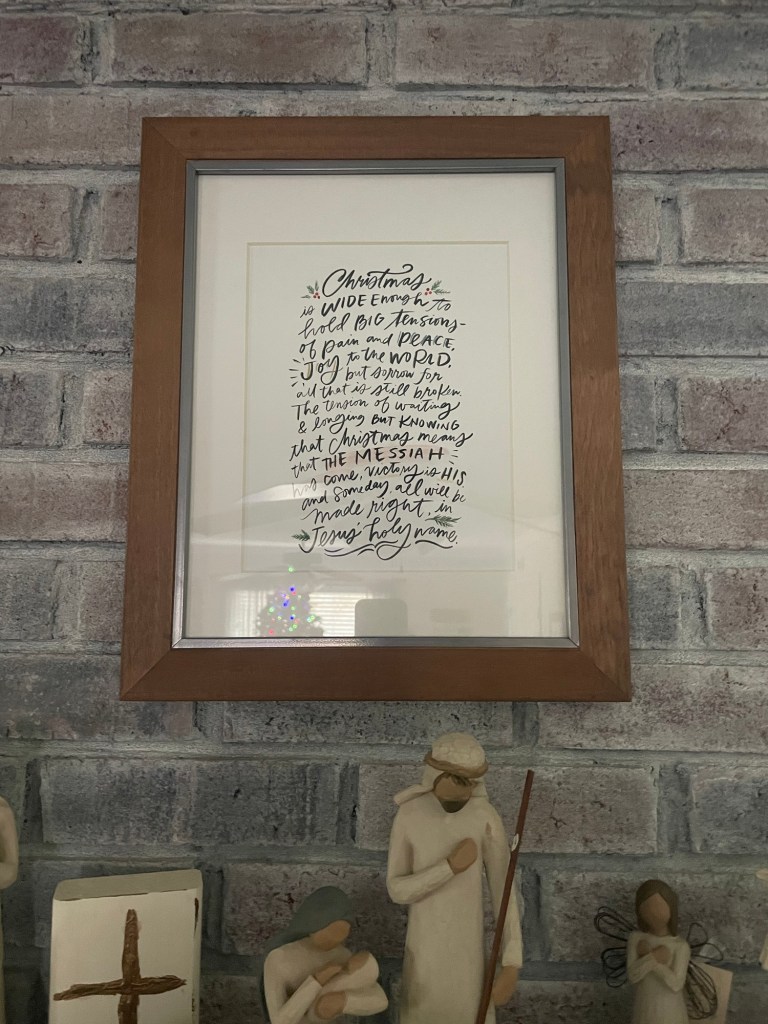
Ethan’s Mom: A couple of years ago, I found a hand-lettered print that we now display every Christmas. It reads:

Christmas is wide enough to hold big tensions – of pain and peace, joy to the world but sorrow for all that is still broken. The tension of waiting & longing but knowing that Christmas means that the Messiah has come, victory is His, and someday all will be made right, in Jesus’ holy name.

I need that reminder every year. I remember sitting in a grief counselor’s office in the fall of 2017 asking if I would ever enjoy Christmas again. I used to love Christmas, I said, but I want to skip the whole thing this year. My capacity to hold joy and sorrow has grown significantly over the last six years, but I still struggle to hold all the joy of Christmas with the pain of missing Ethan. Although we have developed traditions which keep his memory alive in our celebrations, we have never spent a Christmas with our entire family. The closest we have been was in 2016 when I was 34 weeks pregnant with the twins.

This year, the words from that print seem especially significant.  The Wednesday after Thanksgiving, a teenager in our church died unexpectedly.  The following Sunday was both the first week of Advent and his memorial service.  I shed many tears between those two days.  I cried for the abrupt end of his life, for his parents and siblings, and for his friends at church and their families.  

I also cried for the abrupt end of Ethan’s life, for my family, and for me.  There are several details that differ between our stories.  For instance, Ethan’s siblings were much younger and grieved in a very different way than teenaged siblings would after sixteen years of life together.  But you don’t have to look too hard for the similarities.  One night, we went to bed without any indication that our sons would not be alive the next morning.  We both had taken last group pictures of our children not knowing we would never have a complete family photo again.  We were both left with a million questions, most of which have no answer.  All of these thoughts swept me back to March 2017 in a way that I had not experienced in a long time.  

Like many people who love this family and wanted to support them in the shocking aftermath of that day, I wanted to do something. It turns out, our immediate role was not to make a casserole or send flowers, it was to light a candle.

Our family had been asked to light the first candle of Advent the day before anyone had any notion that the week would take such a tragic turn. The litugrical calendar specifies a theme for each week of Advent, and the first week is hope. Sometime late in the week, I realized how important it would be to light that particular candle on the very day that held not only the first worship services since this teenager passed away but also his memorial service later that afternoon.

It may not seem like a lot to light a small candle in the face of so much darkness; I confess that I initially thought it might not even matter to anyone except for me.  But then I remembered an exceprt from one of my favorite read aloud series, “The Green Ember.”  The series follows a group of rabbits as they fight for freedom from their birds of prey captors, and the four books are full of examples of true courage and hope.  In book three, after the wizened captain explains to the young hero that his job in the upcoming rebellion is not to fight but to unfurl a banner over the battle raging below, the young rabbit denies his instinct to charge into the battle. 

How could he help them? He knew he could help them most by shifting the battle in any small way…Then he remembered Helmer’s words, ‘Symbols matter, more than you might imagine.’ Picket’s heart was pumping fast, and he wanted badly to join the battle. But he banked and swept over the center of the skirmish…He waved the torn banner back and forth. “For the Mended Wood!” he cried. He heard an answering shout over the din of war and felt inside the fire of the good fight. He knew that all around, from the desperate fighters in the square to the hundreds rushing into First Warren through the west wall breach, the sight of this renowned warrior waving the true king’s banner atop this desecration of a statue was one to set the faintest heart on fire.

Ember Rising by SD Smith

I do not claim to be a “renowned warrior” but I am a veteran fighter in the ongoing battle against the darkness of dispair. After six Christmases of “holding the tension between joy to the world and sorrow for all that is still broken,” I felt that our family was uniquely empowered to light the candle of hope that morning. It felt like a mission. The hope candle is the first candle, lit before the candles of peace, joy, and love can shine. It’s the first flicker of light, breaking the darkness. It paves the way toward the full illumination of the Advent wreath with its Christ candle glowing in the center on Christmas Day.

I pray that tiny flame shifted the battle in any small way for our church family that morning. I have heard from a few people who reached out to say that the meaning was not lost on them. In some mysterious way, that candle also shined a little tiny bit of redemption on our story. If you have read this blog at all, you know this has been the hardest thing Ethan’s dad and I have experienced, individually and together. But we are still here, standing, fighting for the light, holding on to hope through another Christmas season without Ethan.

One week later, we gathered for our church Christmas musical, a wonderful concert with an intergenerational choir, orchestra, and scenes from the nativity. It was a truly joyful time, but not without its own moments of sorrow. The juxtaposition between the two weeks was apparent – one very sad day with a spark of hope and one very joyful day with a bittersweet note in the air. We could gather for both, knowing that Christmas is big enough to hold it all.

On this Christmas night, whether you find yourself holding on fiercely to a small flickering flame of hope or in the warm glow of a joyful celebration or somewhere in between, I pray that you know “that the Messiah has come, victory is His, and someday all will be made right, in Jesus’ holy name.” Amen.

Light of the World

By: We the Kingdom

Light of the world, treasure of Heaven
Brilliant like the stars, in the wintery sky
Joy of the Father, reach through the darkness
Shine across the earth, send the shadows to flight
Light of the world, from the beginning
The tragedies of time, were no match for Your love
From great heights of glory, You saw my story
God, You entered in, and became one of us

Sing hallelujah, sing hallelujah
Sing hallelujah for the things He has done
Come and adore Him, bow down before Him
Sing hallelujah to the light of the world

Light of the world, crown in a manger
Born for the Cross, to suffer, to save
High King of Heaven, death is the poorer
We are the richer, by the price that He paid

Sing hallelujah, sing hallelujah
Sing hallelujah for the things He has done
Come and adore Him, bow down before Him
Sing hallelujah to the light of the world

Light of the world, soon will be coming
With fire in His eyes, He will ransom His own
Through clouds He will lead us, straight into glory
And there He shall reign, forevermore

Sing hallelujah, sing hallelujah
Sing hallelujah for the things He has done
Come and adore Him, bow down before Him
Sing hallelujah to the light of the world
The light of the world

Quick note to end 2022

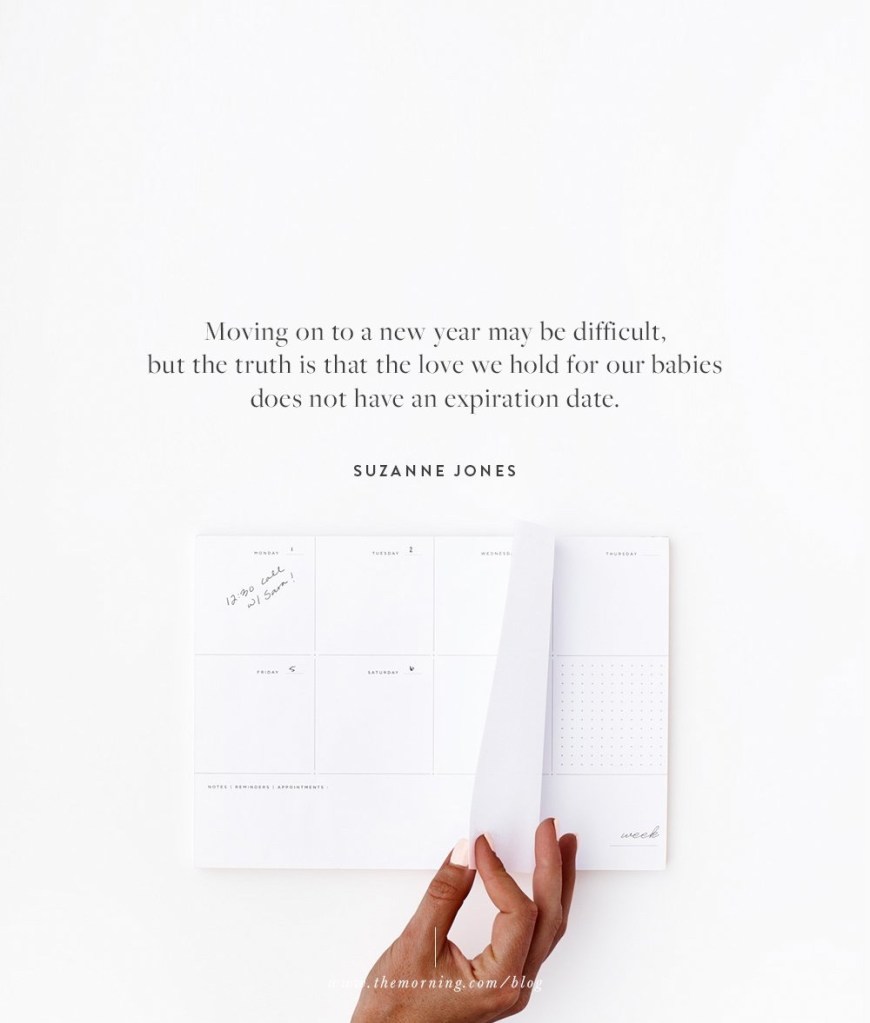
Ethan’s Mom: Well, I have had a few blog posts rattling around in my head but didn’t get anything written in the last few months of the year. I am hoping to be more intentional with this space in 2023, but before the calendar flips, I did want to share a post I wrote for The Morning that was published this week. I am grateful for this organization, which has been so helpful to me personally, and for the chance to write to a larger audience of grieving moms. “Facing the New Year Without Your Baby” is my second piece for their blog, describing the unexpected grief that comes with New Year’s Eve and Day. Please check out their website for resources including a blog, podcast, and online community for moms who have experienced pregnancy and infant loss. We will be back on our blog in 2023 as we face our sixth year missing our sweet Ethan and honoring his life in this space.

Round Two

Ethan’s Mom: “Many people find that the second year is harder than the first.”

I remember hearing these words from a grief counselor at the Amelia Center after the first anniversary of Ethan’s death, and they knocked the wind out of me. How could anything be harder than the year we had just (barely) survived? How could anything be harder than the confusion upon waking, the fog throughout the day, and the extreme fatigue brought on by just doing the basic activities of living each day?

I am not sure that it was more difficult, but only because it is one of those apples vs. oranges comparisons. I can say with absolute certainty the second year was extremely difficult in different ways. I thought I was past being in shock a long, long time before I really was, and I had no idea how much it served as a protective barrier against the full weight of grief. The whole first year was a bad dream. Every “first” was horrible and surreal. At the end of all those firsts, I felt like we had earned a reprieve. Does the offseason start now?

No. No, it doesn’t.

Because as soon as you get past all the “firsts,” you immediately start in on the “seconds.” Then it hits you: the seconds are followed by thirds and fourths and you never cross the finish line. I had been so focused on getting through the milestones, not realizing that things weren’t going to feel any better on March 11, 2018. Nothing was going to be the same for the rest of my life. In the second year, our loss felt more permanent and even more profound than it had before.

I have been thinking about that a lot in the last few weeks as the news of the delta variant and its resulting surge in COVID-19 cases is at the forefront of everyone’s mind. It’s another facet of the pandemic that has seemed eerily familiar to me. Over the past 18 months, we have grieved individually and collectively, and while grief is wildly individual, it is also strangely universal.

Loss of control. Heightened anxiety. Confusion at how people don’t understand how completely the world has changed. Questions without answers. Worrying about how this will affect your children in the short and long term. Anger that their childhood is being affected by this thing at all. Anger in general. Chafing at the new restrictions you are living under. A deep desire that things would just go.back.to.normal. The crushing realization that they never will.

Does any of that sound familiar?

As we are looking at another surge, we are seeing all the “seconds” coming right on the heels of all the “unprecedented” events of 2020. All of the sudden everything seems more permanent and more profound to me, and I don’t think I am alone in that. We are all dealing with an unsettling awareness of the fragility of human life and our lack of control over ourselves, our environment, and other people. As my counselor says, “no one is the best version of themselves right now.”

Beyond that is where we start to see different reactions. I think part of all the conflict and craziness is that people are grieving our collective losses in very different ways. Reminders that everyone grieves differently show up in all the books, podcasts, and blogs related to this topic. Fathers and mothers can grieve very differently, even when they both lost the same child. Some can’t get out of bed, and others have excess nervous energy. Some want to return to work as soon as possible, and others don’t want to return at all. Some need to talk more, and some need to think more. I could make a long list of very different behaviors, all of which would be considered normal for grief, although almost none of them are normal behaviors in and of themselves.

I don’t really know what to do with this realization, but I felt better after having thought about all the craziness in these terms. I am not suggesting public policy should be shaped by emotions or science should be ignored. There may well be correct ways to proceed at this point, and we may need to do things we do not want to do. I think my point is that we are all doing things we don’t want to do. Again. So let’s all just be kind to ourselves, love our neighbors, and know that “many people find the second year is harder than the first.”

When Fortune Cookie Theology Isn’t Good Enough

Ethan’s Dad: So since we last made an entry here, everyone’s lives have been affected in some way or other by the COVID-19 virus, more commonly referred to as the coronavirus. Some parts of our lives have been put on hold, and for some their worlds have been completely turned upside down. If you are in that last category, please know that we are praying for you.

There is so much that has been, and could be, said about the virus and the chaos it has created. But one thing I certainly think the situation has starkly demonstrated is that there is a lot about our lives we do not control. You cannot really control whether you will get the virus or not (you can enhance or diminish probabilities, but that isn’t the same as control). You cannot control what effect the virus will have on you if you do contract it: will you be asymptotic, severely afflicted, or somewhere in between? You cannot control how the stock market will react to the measures that have been taken to mitigate the effects of the virus. And so on it goes.

A natural reaction people often have to the realization that they do not control as much as they believed they did is to feel fear. It is the same for things we cannot fully understand: a natural fear accompanies a lack of knowledge or a lack of control. For Christians, this fear can be managed, mollified, or even defeated by the thought that God is in control and that He understands all that is going on.

We have already been through an event of horrifying chaos in which we were completely helpless, watching our son’s life expire without warning, no matter how much we screamed for it not to be so.  And in the immediate aftermath of that horror, we had our share of “armchair theologians” tell us that it was all okay because “God is in control” and “everything is part of His plan.”  In attempting to absorb those responses, I came to understand that in such a time, the proclamation that “God is in control” turns into a mantra, a crutch that is used to quickly move past difficult questions rather than to honor God’s truth.

When “God is in control” acts as an incantation in the face of all we don’t understand, as the full-stop answer when we have no answers, then it loses its value as a foundation for faith.  When someone is in the midst of overwhelming grief, there is no capacity to delve into what “control” really entails, and so, rather than the statement serving as a faith conversation starter, the “good Christian” — the hurt Christian — will immediately nod his or her head and say no more.

This is one of the reasons you should not blithely say “God is in control” (or a variation of it) to a fellow Christian who has just suffered a tragic loss. You may think it sounds comforting, but to someone who has just lost someone irreplaceable, it is belligerent and cold. The sheer finality of the statement does not allow the sufferer any space to grieve, to fume, to question. It says: “Don’t be sad. Don’t worry. Don’t wonder. Just accept that this is how God planned it.”

I can tell you from personal experience that the person who is suffering the loss will not appreciate what you are saying; he or she will resent it, loathe it, scream (at least inwardly) about it, and then feel guilty for those perfectly acceptable feelings. (It was only later that I learned to extend some grace toward those who would share this “bit of wisdom” with me, a grace born from the realization that it can be extremely difficult to find a “right way” to comfort someone suffering a profound loss). In the end, you are not ministering to that person with this trite expression; you are really just trying to make yourself feel better about what has happened because you don’t have a good explanation for it. But hey, at least you were able to say something Biblical about it, and that’s a lot better than saying nothing, right?

Actually, this might surprise you, but one of the best things you can do is to say very little, and instead just be there to listen — even if the person suffering isn’t saying anything. Mind you, I am not saying that you should just pretend the terrible thing didn’t happen for fear of upsetting the person more. Acknowledgment of a person’s loss is crucial. There has never been a moment in which my wife and l have wished that people would just act like Ethan did not die, because failing to acknowledge that is like saying he never existed, he never mattered. Just because you cannot specifically identify with a person’s loss because you haven’t suffered the same thing does not mean you cannot acknowledge it. By mentioning the one who was lost, you are not going to cause the sufferer to feel a deeper despair than he or she is already experiencing. You will be honoring the rightness of the grief because it shows you know the loss was real.

But beyond the acknowledgment, listen and give the one who is grieving room to express true feelings of anger, bewilderment, and even some despair. Allowing that honesty without sermonizing can be its own witness to that person. If you want to do something with the Bible, then go to the Psalms with them. Read Psalm 13 or 77 or 88 with them so that they can know it is okay to feel as they do. For why else would such expressions of despair and questioning be in God’s Word? Loving in this kind of a situation is not about spouting fortune-cookie theology to solve a problem, but about listening to the questions, the expressions of anger, and the sighs of anguish and despair.  It is about being present while giving space for real grief.

That is about all this post can handle.  Since I have fired a shot across the bow about what God’s control might really mean in relation to evils like a child’s death or an insidious virus, I will follow up with another, much lengthier entry. But for the moment, remember that when it comes to the throes of grief, listening is far more important that dispensing answers.

Three Years

Ethan’s Dad: What does three years mean? It means never getting to see Ethan run around with a foam light saber and talk about using “the forest” (the Force). There will never be any catching him as he tries to run out of the kitchen to avoid having his mouth and hands wiped off. We will not be playing hide and seek where he thinks he’s being sneaky but he is really hiding in plain sight. I won’t be jumping on the trampoline with him while his brothers and sister fall down laughing because the bounces are too high for them to keep up. We do not hear his cry when he wakes up from a nightmare or a bad cough and get up to come console him. There are no walks in the sunshine where we end up having to carry him. There is no constant companion by N’s side, dressed in identical clothes, copying each other as they drive toy cars around the playroom.

This is what irretrievable loss means. It occurs every day, for three years and counting, as we walk on without our little caboose. Our lives are more “normal” now because the more you keep living beyond the day of loss, the more you develop rhythms of life that consist of a family with just four children. It isn’t that you forget — Never That — but that it becomes achingly familiar to go about the activities of life in his absence. I suppose it is that way with all loss.

Except that, in this case, N always provides a physical reminder of what we are missing with Ethan not here. Through no fault of his own, every joy we experience with N comes with a catch, a prick of that wound which will not altogether heal this side of heaven. Of course N is his own person, but they are twins, so there is a very real sense in which they are always bound together. Overall, it is a tremendous blessing that N serves as both a comfort for, and a reminder of, losing Ethan, but it is a blessing forever touched with sadness.

But then there is also the aspect of Ethan’s uniqueness, and this is the part that is perhaps the hardest of all. It is the reality that because Ethan died so young, there are so many traits we never had the privilege of discovering about him that make him different than his twin and everyone else. Would his eyes have stayed that deep blue? (I like to think so). Would he have been stubborn or easy-going? Would he have been the rambunctious sort or a quiet thinker? Would he have been interested in a variety of foods (like his mom) or extremely picky (like his dad)? Would he have loved art or science or history or math or sports? The list seems endless, and with it so does the depth of the loss. Like all parents, we thought that we would have decades to watch Ethan grow (along with his siblings), not two months, and then suddenly there was . . . nothing. So yes, it has been three years, but what comes to mind is a few thousand little things that will not happen, that will never be revealed here, because he is gone.

There is a perspective in this world that would compare all of the foregoing as being akin to crying over spilled milk. This view tells us that life is about results, it is about what you accomplish or produce, that what matters is what “moves the needle” to make people take action, and that you should only invest your life in what you can control. Some call this view “realism.” The premise of realism is a material one, and if you accept that premise — what is real is what you see — this view is entirely correct: Not one moment thinking about Ethan, not all the tears shed for his loss, no matter how many words are written to help express the rending of our hearts . . . none of it will change the reality that Ethan is gone; none of it will bring him back to us. By the realist’s standard then, none of these expressions matter. Why should we grieve at all if everything is transient and immediate material effects are all we value?

But the Bible — and I think our hearts -– tell us that ultimate reality is marked by the things that are unchanging, unseen, and not even done by us. Ecclesiastes 3:11 says “God has made everything beautiful in its time; He has also set eternity in the hearts of men; yet they cannot fathom what He has done from beginning to end.” Yes, there is beauty in this world, but our hearts tell us there is more, that there are things which are enduring and defy concrete understanding. Second Corinthians 4:18 tells us that we should “fix our eyes not on what is seen, but on what is unseen, since what is seen is temporary, but what is unseen is eternal.” Revelation 21:4 relates that there will come a time when “there will be no more death, or mourning, or crying, or pain, for these former things have passed away.” First Corinthians 13:8 proclaims that “where there are prophecies, they will cease; where there are tongues, they will be stilled; where there is knowledge, it will pass away,” but that “Love never fails.”

Our grief, our longing, and our continued remembrance of Ethan does not change the material reality of his absence, but it matters because it reflects our steadfast love for him. That love is real and enduring. It expresses God’s truth that Ethan is a gift to our family, he is unique, and he is eternal. Two months was far too short; these last three years have felt far too long; and this melancholy ache will be with us for the remainder of our time on this earth. But our love, and more importantly, God’s love, transcends all of that, so that we do not “grieve without hope” because “Jesus died and was raised to life again, and when Jesus returns, God will bring back with Him the believers who have died.” 1 Thessalonians 4:14. Thus, the years after his loss may continue to mount, but we will still grieve — albeit sometimes in different ways than we did at first — because we will always love him and know that God loves him, and that Love will one day “turn our weeping into dancing, remove our sadness and cover us with joy.” Psalm 30:11 (as rendered by Ellie Holcomb in The Broken Beautiful).