A Story for Our Time

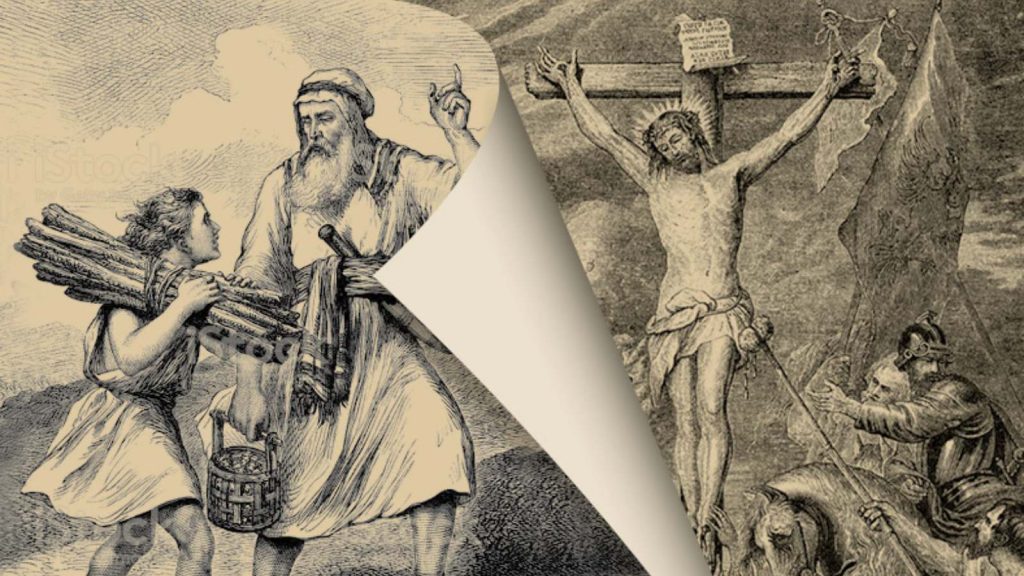
Ethan’s Dad: As my last post noted, we recently celebrated the twins’ fourth birthday. In our Bible Study Fellowship classes, the lesson for Ethan’s Mom and I that week of Ethan’s birthday was Abraham’s sacrifice of his son Isaac (Genesis 22:1-14). People who believe or live as though there is no spiritual aspect to life would ascribe that kind of occurrence to a mere coincidence, but if you believe that God exists, that He loves you, and that He is active in your life, then it is not so easy to dismiss this scheduling alignment.

So why would God have us study that particular story on that particular week? From a certain point of view, it seems cruel to have to ponder a story about God asking Abraham to sacrifice his son on the same week we remember the coming into the world of the the son we lost. And I don’t want what I am going to relate here to obscure the reality that engaging with the lesson was painful. To be sure, there are key differences between Abraham’s experience and ours: God did not ask us to give up Ethan, like He commanded Abraham to sacrifice Isaac, and our son was actually taken, without warning or explanation, while Abraham ultimately received the grace of not having to go through with the horrible deed and thus retained his son. Perhaps most importantly, the Genesis text expressly states that God was testing Abraham (22:1). As I have related in this blog before, I steadfastly believe that Ethan’s death was not a “test” from God: death is evil; it is not part of God’s original plan for us, and ascribing a tragedy like that to some sort of spiritual maturation process co-signs Ethan to being nothing more than a pawn in other people’s lives, which is absolutely wrong.

Even though we can mentally recognize those differences, the story still evokes strong emotions because of our experience. We understand what is being asked of Abraham in a tangible way few others can. Likewise, we have a deeper sense of what it actually meant for God to sacrifice, and be separated from, His Son Jesus on the Cross. (Though no human can adequately grasp the level of that sacrifice because Jesus physically endured an almost unimaginably grotesque death, He spiritually bore the entire sin of the world for all-time, and He and the Father had never before experienced the separation this sacrifice required). But if you asked us, we would say in a heartbeat that this deeper sense of understanding the magnitude of the loss at issue is not worth it. Indeed, there have been numerous times in the wake of that most horrendous of days that we have questioned whether this whole way of setting things up makes sense or was worth it. Why would God create a world where He knew so much pain was going to be inflicted on people He says He loves?

But then you have to remember Genesis 3:15 (“And I will put enmity between you and the woman, and between your offspring and hers; he will crush your head, and you will strike his heel.”) which tells us that God also set up this world in such a way that His Son (and therefore also Himself) was going to hang on a tree by nails in order to save us. So we can’t say that God is ducking any of the pain or that this is some kind of cruel joke or game He is playing because no rational person would set up such a wrenching game. In other words, God could identify with Abraham, and He can identify with us, just as we can with them.

And that truth got me thinking that perhaps the reason God had us do this particular lesson on this particular week was to identify with Abraham all the way through the story — not just in the sense of loss — but in order to affirm to us that Ethan was a precious gift to us, just as Isaac was to Abraham. For just as Isaac’s conception and birth were miracles, it also was a miracle that Ethan was born safely in that ambulance four years ago. As his only child, Abraham undoubtedly had spent a tremendous amount of time with Isaac before God gave this test to Abraham. We spent two priceless, brief months with Ethan, caring for him more intensely than any other baby we have had, up until the very moment he left us. But there is more to the parallel. Abraham was able to obey God’s command because Isaac’s life was a testimony to the facts that God always keeps His promises and that God does impossible things. According to Hebrews 11:19, Abraham in fact was clinging to the belief that Isaac would be raised from the dead, even though he had no concrete experience of such an event. But Abraham did know that God had demonstrated the power to create life from Sarah’s “dead” womb, and so Abraham firmly believed (because otherwise how could he ever have taken even the first step toward that mountain?) that even Isaac’s death could not hinder God from keeping His promises about Isaac and his offspring.

It is true that God endured the sacrifice of His Son while knowing that that Jesus was going to be raised from the dead, while Abraham had to rely on faith in carrying out God’s command to sacrifice Isaac. But that is precisely the point: we must come to understand that faith in God is as certain as actually knowing how it all ends. God commended and blessed Abraham, He preserved Isaac in the flesh, and He saved Abraham for eternity precisely because of Abraham’s indomitable faith in what was true: that God is a promise-keeper who does the impossible, including resurrection. Thus, to God knowing the answer is not as important as having faith in Him that there will be an answer.

Yes, this story of Abraham and Isaac is about how obedience to God may involve great sacrifice — though not more than God already has sacrificed for our salvation. But it is just as much about sustaining faith in God’s power of resurrection. So perhaps God was reassuring us on that particular week that His gift of Ethan to us was not in vain; we, like Abraham, can believe with confidence that we will see Ethan again because God ensured exactly that with none other than His own Son, who lives and is with Ethan at this very moment. Praise the Lord for His comforting truth in the midst of great sorrow!

Happy Fourth Birthday, Ethan!

Ethan’s Dad: It is late, but I cannot let the day pass without marking what should be our Little Caboose’s fourth birthday. His twin brother Noah had a good birthday, I think, filled with most of the things such a day should have for a child: special meals, an adventure with Mom, some cool presents, and visits from grandparents (both virtual and in person). Of course, those also are all things Ethan does not get to experience, and we, his family left in the Shadowlands, are so much the poorer for it. The joy we get to see from Noah is matched by the void left by Ethan’s absence.

And once again with these events that mark time we remain astonished in opposing ways that we have arrived at the twins’ fourth birthday because time both flies and crawls in this situation. It flies as we watch Noah, in the same way so many other parents do, grow like a weed throughout his precious childhood. It crawls as we miss Ethan, always yearning for that time when we will see him again. Time is indeed relative when you live with having twins but only one of them is still living with you on this earth.

I am ever thankful that we continue to get to see Noah’s joy. It is impossible to exaggerate the enormity of that blessing, one which I am painfully aware I would not recognize quite so well if it was not for Ethan’s absence. Yet, I am always heartbroken that we do not simultaneously get to see the same joy from Ethan, or the unique joy the boys certainly would have given to each other. Noah is now old enough to express to us — and often does— that he wishes Ethan would come back to us, and the sweetness of that unknowing longing evokes an inner ache that defies description.

My consolation — my hope — is that one day we are going to be able to sit down with Ethan and have a bunch of birthday parties in a row, or one party so stupendous that it somehow dwarfs these lost milestones. What will be his favorite party game, his choice of cake, his big present? I wonder as I wait for that jubilee which exceeds all earthly celebrations.

For now, we mark the time, we cherish Noah, and we cling to the promise that God is able to keep our Ethan, who we have entrusted to Him, until the day Christ returns. (2 Timothy 2:12). Our four-year-old who never reached four or three or two or one was celebrated and mourned this day. And so he will be until Kingdom Come.

The Futility of Going Back to the Future

Ethan’s Dad: Have you ever noticed how much people are obsessed with time? The common observation is that ours is a fast-food culture, which means we want/demand everything to happen as instantly as possible. But the obsession doesn’t stop there. Countless stories, television shows, and movies revel in imagining that we could manipulate time — whether that entails traveling backward to remedy tragedies and mistakes or jumping forward to discover what awaits us, and they posit questions about the consequences of moving either way on the timeline. We long for this power over time even though there is no realistic indication that we could obtain it.

But that does not stop people from thinking about the possibility of time-travel. In this vein, I recently read a news story about the paradox of time-travel. The paradox of time-travel is that if a person was to travel back in time in order to fix something that went wrong in history — like trying to prevent Adam and Eve from eating the fruit that caused the fall of humanity into sin — fixing that problem would mean that the problem would no longer exist when that person returned to his or her own time, so there would be no motivation to go back in time in the first place. Put another way, things happen the way they happen, and if they unfolded another way than was intended we could never know it because we are creatures of the time we are born in. However, a prolific young scientist in Australia claims to have demonstrated through mathematics that the paradox of time-travel does not exist. The young man says that if you were to go back in time and fix a problem, events would conspire in such a way that the problem would occur anyway. In the example I just referenced, if you stop Adam and Eve from eating the fruit, someone else would still disobey God, and we would still have sin. So, the motivation for going back to fix the problem would still exist for the time-traveler, and thus there is no paradox. Of course, if the Australian mathematician is correct, the lack of a paradox also means that even if humans could go back in time, they could only change a particular variable of time, not what ultimately happens in the timeline. In other words, there is an inevitability to the unfolding of events even though human agency makes deliberate choices about how to do things.

You might think this is a strange topic to explore in this blog. But to me this theory sounds an awful lot like God’s planning of time in this world. We know choice exists because without it love would not be real. However, we also know from the Bible that God has had a plan from before the beginning of time as to how humanity’s arc, and God’s salvation, would unfold. One of the verses I recite every time I visit Ethan’s grave is a paraphrase of Titus 1:1-2: “The faith of those chosen of God and the knowledge of truth are a faith and knowledge that rest in the hope of eternal life which God, who does not lie, promised before the beginning of time.” The prophet Isaiah proclaims: “O Lord, You are my God; I will exalt you and praise your name, for in perfect faithfulness You have done marvelous things, things planned long ago.” (Isaiah 25:1). Ecclesiastes 3:11 (my all-time favorite verse) informs: “[God] has made everything beautiful in its time; He has also set eternity in the hearts of men. Yet they cannot fathom what He has done from beginning to end.” These (and many other) Bible verses point to God setting up time as an unfolding story and yet planning for eternity even before He started the clock of history. People often wonder how these two things can be simultaneously true. But if time operates in such a way that we are able to make deliberate choices and yet the grand sweep of history unfolds only one way, i.e., we cannot manipulate the timeline (because we are not God), then it seems to me that we have at least a partial answer to the mystery. God has designed our timeline in such a way that our billions of variable choices impact us, but they do not affect the destination of history, which culminates with salvation through Christ for all who believe.

Pondering such a model of existence is both mind-boggling and awe-inspiring. The question that often arises from such pondering about time and eternity is: why would God set all of this in motion if He knew about all of the atrocities that would subsequently transpire? Or, as Fyodor Dostoevsky famously asked in “The Grand Inquisitor” chapter of The Brothers Karamazov: How can God say that all of this is worth the suffering of even one starving child? The consequences of the abhorrent evil Adam and Eve brought into this world are enormous, some would say, incalculable.

I think the answer to The Brothers K question lies in coming to appreciate that there is no reason that we should exist at all apart from God’s grace. God was here before all of the creation we see and that we are still discovering: Absolutely nothing required Him to make all of this and all of us in the first place. He never had to say “Let there be light.” He could have left Earth formless and void. Nothing mandated that He create creatures in His image. Yes, there is a whole lot about this world that is evil and dark and relentlessly unforgiving; viruses are part of that, as are the unexplained deaths of infant children, and seemingly a million other cruel things. But before all of that there was God. And by His own choice, first there was light, and then there was the gift of life. And all of that was immeasurably good. Moreover, beyond the irreplaceable gift of existence is the fact that God accounted from the beginning for humanity’s going astray, and His solution to that immense problem entailed sacrificing His own Son. If we stop and think about all of that first, before all else, it should produce a profound sense of gratitude and thankfulness. As the Psalmist said: “It is good to proclaim your unfailing love in the morning, and your faithfulness in the evening.” (Psalm 92:2). Such an attitude of thankfulness as a starting point can change our perspective of what we see before us. It does not erase evil, but it reminds us that the good, that life itself, is not a brutal fact of necessity, but is truly a gift from God.

I always lament (and forever will) that Ethan did not get to live more of this life, but I am thankful that He lived at all, and I should remember that the same is true for me and everyone else. As the Psalmist also reminds us, “For with You is the fountain of life; in Your light we see light.” (Psalm 36:9). The light of life is sparked by thankfulness to the God who gave us everything. Can we honestly say that never existing would have been better than the evil that plagues the world, especially given what God foreshadowed in the Garden of Eden and brought about through Jesus? The Lord declares: “I make known the end from the beginning, from ancient times, what is still to come. I say, ‘My purpose will stand, and I will do all that I please.'” (Isaiah 46:10). That end is this:

“The Lord God will swallow up death forever.
He will wipe away the tears from all faces;
He will remove the disgrace of His people from this whole earth.
For the Lord has spoken.

And in that day it will be said: ‘This is our God;
We have waited for Him and He has saved us.
This is our Lord;
Come let us be glad and rejoice in His salvation.'”

(Isaiah 25:8-9).

The inexpressible hope of this end to time-bound life is why God’s answer to Job in chapters 38-41 of that difficult work is not as heartless as it can seem from our perspective of sympathizing with Job’s immense suffering.

“Then the Lord spoke to Job out of the storm. He said:

“Who is this that obscures my plans
with words without knowledge?
Brace yourself like a man;
I will question you,
and you shall answer me.

“Where were you when I laid the earth’s foundation?
Tell me, if you understand.
Who marked off its dimensions? Surely you know!
Who stretched a measuring line across it?
On what were its footings set,
or who laid its cornerstone—
while the morning stars sang together
and all the angels shouted for joy?

“Who shut up the sea behind doors
when it burst forth from the womb,
when I made the clouds its garment
and wrapped it in thick darkness,
when I fixed limits for it
and set its doors and bars in place,
when I said, ‘This far you may come and no farther;
here is where your proud waves halt’?

“Have you ever given orders to the morning,
or shown the dawn its place,
that it might take the earth by the edges
and shake the wicked out of it?
The earth takes shape like clay under a seal;
its features stand out like those of a garment.
The wicked are denied their light,
and their upraised arm is broken.

“Have you journeyed to the springs of the sea
or walked in the recesses of the deep?
Have the gates of death been shown to you?
Have you seen the gates of the deepest darkness?
Have you comprehended the vast expanses of the earth?
Tell me, if you know all this.

“What is the way to the abode of light?
And where does darkness reside?
Can you take them to their places?
Do you know the paths to their dwellings?
Surely you know, for you were already born!
You have lived so many years!

“….

“Do you known the laws of the heavens?
Can you set up God’s dominion over the earth?

“….

“Who endowed the heart with wisdom
or gave understanding to the mind?

“….

“Would you discredit my justice?
Would you condemn me to justify yourself?

“….

“Then Job replied to the Lord:

“‘I know that you can do all things;
no purpose of yours can be thwarted.
You asked, “Who is this that obscures my plans without knowledge?”
Surely I spoke of things I did not understand,
things too wonderful for me to know.

“‘You said, “Listen now, and I will speak;
I will question you,
and you shall answer me.”
My ears had heard of you
but now my eyes have seen you.
Therefore I despise myself
and repent in dust and ashes.'”

Job 38:1-20, 33, 36; 40:9; 42:1-6.

God was not saying to Job that He did not care about Job’s suffering; after all, He was very careful to curtail Satan’s desire to destroy Job. But God was saying that He has existed from before the beginning of time and that He created this world with His own rules and intentions. For some reason, God did not (fully) reveal the end of history to Job, and, as with Job, He does not reveal all of the reasons for the shattering events of our earthly lives. Yet, for us to question God’s ways without accounting for the entire picture is to approach sophistry. The Lord does not despise heartfelt questions: God did not stop Job from asking his questions over and over again, and the Psalms are full of questions to God for why He allows things to occur the way they do. But God desires that we not assume a position of authority as if we have the knowledge and power only He possesses.

Accepting that we cannot fully comprehend why events unfold as they do, and that we cannot actually alter God’s plan, can bring some peace in the turbulence of life. For one thing, from these truths it follows that just because we cannot fathom a reason for an occurrence does not mean that there is no reason for it (a mistake often made by atheists). For another, it means that no matter how terribly we screw up, we cannot throw God for a loop because events will inevitably culminate with Jesus’s return, God’s victory over sin and death, and eternal life in glory with Him for those who believe. We must always keep this end in mind as we traverse our story in time because there will be life events we desperately wish we could do over.

For instance, it is only natural that I wonder about that March night and morning in 2017: that maybe if I had done just one thing differently Ethan would still be alive. But I cannot go back because, for whatever reason, this is how the story unfolded, and I am a part of this time, not outside of it like God. Moreover, as his mother and I know by now (though a part of each of us will always struggle to admit it), nothing we did caused Ethan to die. For a combination of reasons, unknown to us and to the medical world, his little body could not hold on anymore. He spent one last night and early morning close to us, and then he left and was welcomed into the arms of Jesus. And as painful as Ethan’s absence always will be during the remainder of our time here on earth, we must always remember that this catastrophic event is not the end of story. God, at the end of time, will, in a sense, undo time’s scars.

From His Word, we can see that God’s love overcomes this wretched evil and that the evil ultimately will be wiped away. This means that there is something in this time-bound life that is vital to our lives in eternity. Part of the importance is obviously God’s demonstration of His love for us, which had to physically unfold in order to be truly appreciated.  I have been saying that God is outside of time, but perhaps even more wonderous than that is the fact that God actually chose to enter our time in order to ensure its glorious ending.  God not only set time in motion; He marked its defining moment with His own presence, and then sacrifice.

But I suspect that part of the importance of living this life is the idea Andrew Peterson suggests in his song Don’t You Want to Thank Someone for This

“And when the world is new again
And the children of the King
Are ancient in their youth again
Maybe it’s a better thing
A better thing

“To be more than merely innocent
But to be broken then redeemed by love
Maybe this old world is bent
But it’s waking up
And I’m waking up”

There is some way that experiencing this life, both in its immense joys and wrenching sorrows, heightens our lives in eternity in a way that would not have been true if all of this had not occurred. We cannot know exactly how that is; our charge is to trust that this is true because of what we do know: that God so loves us that He gave His only Son to die for us, that Jesus rose again, and that one day we will spend eternity with Him. Those are the timeless truths for our time-bound lives.
Three Years

Ethan’s Dad: What does three years mean? It means never getting to see Ethan run around with a foam light saber and talk about using “the forest” (the Force). There will never be any catching him as he tries to run out of the kitchen to avoid having his mouth and hands wiped off. We will not be playing hide and seek where he thinks he’s being sneaky but he is really hiding in plain sight. I won’t be jumping on the trampoline with him while his brothers and sister fall down laughing because the bounces are too high for them to keep up. We do not hear his cry when he wakes up from a nightmare or a bad cough and get up to come console him. There are no walks in the sunshine where we end up having to carry him. There is no constant companion by N’s side, dressed in identical clothes, copying each other as they drive toy cars around the playroom.

This is what irretrievable loss means. It occurs every day, for three years and counting, as we walk on without our little caboose. Our lives are more “normal” now because the more you keep living beyond the day of loss, the more you develop rhythms of life that consist of a family with just four children. It isn’t that you forget — Never That — but that it becomes achingly familiar to go about the activities of life in his absence. I suppose it is that way with all loss.

Except that, in this case, N always provides a physical reminder of what we are missing with Ethan not here. Through no fault of his own, every joy we experience with N comes with a catch, a prick of that wound which will not altogether heal this side of heaven. Of course N is his own person, but they are twins, so there is a very real sense in which they are always bound together. Overall, it is a tremendous blessing that N serves as both a comfort for, and a reminder of, losing Ethan, but it is a blessing forever touched with sadness.

But then there is also the aspect of Ethan’s uniqueness, and this is the part that is perhaps the hardest of all. It is the reality that because Ethan died so young, there are so many traits we never had the privilege of discovering about him that make him different than his twin and everyone else. Would his eyes have stayed that deep blue? (I like to think so). Would he have been stubborn or easy-going? Would he have been the rambunctious sort or a quiet thinker? Would he have been interested in a variety of foods (like his mom) or extremely picky (like his dad)? Would he have loved art or science or history or math or sports? The list seems endless, and with it so does the depth of the loss. Like all parents, we thought that we would have decades to watch Ethan grow (along with his siblings), not two months, and then suddenly there was . . . nothing. So yes, it has been three years, but what comes to mind is a few thousand little things that will not happen, that will never be revealed here, because he is gone.

There is a perspective in this world that would compare all of the foregoing as being akin to crying over spilled milk. This view tells us that life is about results, it is about what you accomplish or produce, that what matters is what “moves the needle” to make people take action, and that you should only invest your life in what you can control. Some call this view “realism.” The premise of realism is a material one, and if you accept that premise — what is real is what you see — this view is entirely correct: Not one moment thinking about Ethan, not all the tears shed for his loss, no matter how many words are written to help express the rending of our hearts . . . none of it will change the reality that Ethan is gone; none of it will bring him back to us. By the realist’s standard then, none of these expressions matter. Why should we grieve at all if everything is transient and immediate material effects are all we value?

But the Bible — and I think our hearts -– tell us that ultimate reality is marked by the things that are unchanging, unseen, and not even done by us. Ecclesiastes 3:11 says “God has made everything beautiful in its time; He has also set eternity in the hearts of men; yet they cannot fathom what He has done from beginning to end.” Yes, there is beauty in this world, but our hearts tell us there is more, that there are things which are enduring and defy concrete understanding. Second Corinthians 4:18 tells us that we should “fix our eyes not on what is seen, but on what is unseen, since what is seen is temporary, but what is unseen is eternal.” Revelation 21:4 relates that there will come a time when “there will be no more death, or mourning, or crying, or pain, for these former things have passed away.” First Corinthians 13:8 proclaims that “where there are prophecies, they will cease; where there are tongues, they will be stilled; where there is knowledge, it will pass away,” but that “Love never fails.”

Our grief, our longing, and our continued remembrance of Ethan does not change the material reality of his absence, but it matters because it reflects our steadfast love for him. That love is real and enduring. It expresses God’s truth that Ethan is a gift to our family, he is unique, and he is eternal. Two months was far too short; these last three years have felt far too long; and this melancholy ache will be with us for the remainder of our time on this earth. But our love, and more importantly, God’s love, transcends all of that, so that we do not “grieve without hope” because “Jesus died and was raised to life again, and when Jesus returns, God will bring back with Him the believers who have died.” 1 Thessalonians 4:14. Thus, the years after his loss may continue to mount, but we will still grieve — albeit sometimes in different ways than we did at first — because we will always love him and know that God loves him, and that Love will one day “turn our weeping into dancing, remove our sadness and cover us with joy.” Psalm 30:11 (as rendered by Ellie Holcomb in The Broken Beautiful).

Happy Birthday, Ethan

Happy 3rd Birthday, our precious Little Caboose. We can’t put a present at the end of your bed for you to open this morning. We can’t sing Happy Birthday to you and watch your smile. We won’t be wondering where to go for dinner because you and your twin brother picked different places.  We can’t see you try to blow out candles on a cake with Noah and then watch you stuff your face with it. We can’t watch you tear wrapping paper off of presents and then hear you giggle with glee when you see what is inside. We won’t be able to take you with us when we go off to Disney World next week to celebrate as we have done when each of our children has turned 3.

All we can do is continue to love you, remember you, and long for the day when we finally will get to celebrate with you. “For we know in whom we believe, and that He is able to keep you, our Ethan, who we have committed to Him, until the day Jesus returns.” (2 Timothy 1:12).

The day you were born was filled with trauma, and the too few days after that we had with you were hard on you and your little heart. But never, ever doubt, son, that each and every one of those days was a gift we will treasure forever. We miss you terribly every single day, dear Ethan, but especially so on this day which marks our introduction to your contemplative blue eyes and irresistibly adorable face.  We love you always and forever.  Celebrate a little with the Lord today, but be ready for the ultimate party filled with tears and cheers on that day we will be there to hug and hold you again.

A Purpose in Prison

File:1627 Rembrandt Paulus im Gefängnis Staatsgalerie Stuttgart anagoria.JPG

Ethan’s Mom: This summer, I was contacted by the leader of our BSF chapter after being recommended for consideration as a group leader for this year’s study. For those unfamiliar with BSF (Bible Study Fellowship), it is a worldwide interdenominational Bible study that follows a specific format in all of its local chapters. Members interact with scripture in 4 ways each week — personally answering questions regarding a scripture passage, discussing their answers in a small group, listening to a lecture from the local teaching leader, and reading notes on the passage published by BSF. The study usually concentrates on a single book of the Bible over the course of a school year. I started BSF in 2016, and my first study was on the book of John. I could write a whole separate blog post on the ways I have seen and heard God work in my life through the blessing of BSF over the past 3 years. If you have read any other blog posts, you have heard us mention it before. I truly love BSF, and in many ways, attending small group and lecture has been easier for my broken heart than church services on Sunday morning.

But nowhere in the world is totally safe for a mother who has lost a baby. A sight, sound, or comment can bring me right back to the trauma resulting from Ethan’s death or the twins birth in a heartbeat. (Case in point — even typing the phrase, “in a heartbeat” carries such painful connotations for me, and I tried for a minute to come up with another phrase.) This is also true of BSF. Our class has many wonderful older or middle aged women in attendance and leadership, but a significant proportion of class members are young mothers who come and bring their infants and preschool children, who attend an excellent children’s program while the ladies are in group and lecture. After losing a baby, it can be very painful to see and/or interact with pregnant women or those with babies. Sometimes the things “normal people” express anxiety over or complain about seem so trivial in the shadow of the tragedy we’ve experienced. I see those moms that bring twins to class and think how I should be able to chat with them about the unique struggles of raising multiples, but I’m not technically doing that. I admit that it is difficult not to resent that those moms got to keep both of their babies.

Because of this, I prayed and discussed my concerns with Ethan’s dad before committing to lead a small discussion group. I felt like this was something that God wanted me to do, and truthfully, I was very excited about being involved with the leadership team and attending their weekly meetings in addition to our class meetings.

Then I received my class list. 13 young moms, 11 who had registered babies or preschoolers in the children’s program. When I called to introduce myself, I found out at least 3 will be bringing infants to group with them. In my mind, I started picturing these cute, stylish young moms with their perfectly delightful babies and toddlers in tow while I bring two boys and the shadow of someone missing.  These moms don’t need me and my messy theology.

The next day I attended the BSF Summit leader training simulcast with the other area classes. The day was filled with prayer and teaching, and at the very end, they showed a video. I admit, when it started, I wrote it off as cheesy BSF propaganda. The video was a dramatization of Audrey Wetherell Johnson founding BSF in the 1950s. Ms. Johnson had been a missionary to China, even suffering as a prisoner in a Chinese concentration camp during WWII. The video shows her in the camp, sick and cold, explaining to a fellow prisoner that all she wants is for people to love the book in her hands (the Bible) as much as she does. Then it flashed forward to a speech she gave to a ladies mission society after she had returned to California. She frets about what to wear, noting that she didn’t have to worry about being stylish when she was teaching pagans. After the lecture, five women ask her to lead them in a Bible study.  She returns home and complains to a friend that these women didn’t need her, they already knew the Bible. However, her attitude and demeanor betrayed her heart — she didn’t think those California housewives really needed her when so many others had “real” problems. “Why am I to give more to those who have so much?” she asks. The answer comes in a flashback to the concentration camp — a Chinese woman says, “I thought all you wanted was for people to love that book.” So she says yes, still unsure why the setting of her story changed from prison to the suburbs.

But God had a bigger plan. He grew the small Bible study into a worldwide movement that now has over 350,000 class members in more than 40 countries, including her beloved China. She couldn’t see the outcome in her lifetime, but God was faithful to honor her heart’s desire for the Chinese people as a result of her obedience.

My heart’s desire is for Ethan to be remembered, valued as a person and part of our family, and used in God’s kingdom, just as I pray that my living children will be. I don’t see how sharing him with people “who have so much” accomplishes that, but maybe I won’t know in my lifetime. Maybe God will use Ethan in ways that no one could even imagine today.

As He tends to do with important things, God brought this point home again soon after the summit. My mother-in-law gave me a wonderful book, “Perfectly Human: Nine Months with Cerian” by Sarah C. Williams, a professor at Oxford. The author’s daughter, Cerian, received a life limiting diagnosis of skeletal dyspepsia at a 20-week ultrasound. Near the end of the book, Sarah describes an eye-opening moment after Cerian’s loss at a lecture on “the gift of self” given by a Catholic theologian. She had intentionally avoided inviting a colleague who had earlier insisted that not terminating the pregnancy was irresponsible and questioned if her husband was pressuring her to give up her “right to choose.” Sarah runs into the woman on the way to the lecture, and she decides to come along. The lecture sparks an intimate moment between the two women, in which Sarah realizes the reason her colleague no longer believes in God. She goes on to say:

“I realize looking back that I was in danger at that time of getting locked in my own sorrow and grief and cutting myself off from other people. My colleague showed me something important, and her friendship drew me out of myself. Everyone hurts. We all hit the boundaries of our capacity at some time or another.”

Honestly, it can be tempting to cut myself off from other people. Many times it actually feels like I was cut off from people through no choice of my own. Grief is incredibly isolating.  People have avoided us and made ridiculous small talk to avoid mentioning anything about Ethan’s death. I have found this to be true of acquaintances as well as close friends. But I know that refusing to acknowledge the joy or even the pain in others’ lives is no way to live. It is hard not to play the my-pain-is-bigger-than-yours game, but who wins?

I was starting to feel pretty good about all of this when I found out through a seemingly random chain of events that one of my original group members had twins. I asked the leadership team for details, saying that sometimes twins are hard and I would do better if I was prepared. Turns out, this lady has twin boys almost the exact same age as mine. I had to grab onto the counter to steady myself when I received the message. This was my biggest fear – that someone in my group would have twins, 2 year old boy twins at that! The leaders offered immediately to change her to another group without anyone knowing why, so all that was resolved before I talked to her. After the initial rush of emotions that brought up, I realized that God brought that to our attention prior to class time because it was beyond what I can handle at this point. “A bruised reed he will not break” (Isaiah 42:3).  I am pretty sure that would have broken me.

This whole roller coaster was leading up to this week, when our actual first BSF group Tuesday. My mental pictures weren’t too far off, actually. I’m sure they all graduated high school after Y2K and have never heard the distinctive sound of a dial up modem. I felt so old!

It was awkward to introduce myself as the mother of 5. One other woman has a child in kindergarten this year, the rest have kids 2 and under. Two women had babies with them. Two are pregnant, and both are also the mothers of toddlers so the statement was made that they would just be lining everyone up for diaper changes. Before I knew it, I commented that it wasn’t terribly long ago we had three in diapers. Adding in my head, “but that only lasted two months and then we had to donate the stockpile of size 1 diapers.”

So I came home again feeling the weight of balancing being honest and real vs. sharing too much with these women. I’m sure they don’t want to hear about a baby dying of SIDS; it just hits too close to home. I thought I had softened my heart towards them and was ready to be a shepherd to this group, but I didn’t feel very shepherd-y later that afternoon.

I couldn’t seem to pull myself out of the funk. People asked how it went — OK, not great but OK. It was a comfort to pull out the familiar format of notes and questions to start on at home, just like always. Then I read this in the very last paragraph of notes:

Ask God to grip your heart with the truth that He is fully in control and fully good. When trials come, remain in God’s Word and with God’s people. Ask Jesus to draw you close to Him and turn you outwards to others. How might your “prison” be part of Gods plan to make Jesus known and loved to the ends of the earth?

The prison reference is in regard to Paul, but it stopped me in my tracks. One of the comments I made several times in the early days of overwhelming grief was “I feel like I have been given a life sentence in prison for a crime I didn’t commit.” The rest of my life stretched out in front of me like an endless march of identical dark days. There was no time off for good behavior. There was no hope of freedom.

Knowing that, read the quote again. It starts with that tricky tension in reconciling God’s goodness with his sovereignty, a persistent theme in our blog posts. I knew the part about staying in God’s Word; that is what I thought the structure and in-depth study of BSF brought to me. I hadn’t considered that BSF is also a way to remain with God’s people. My experience may indeed feel like a prison, but prisons didn’t stop Paul from shepherding his fledgling churches. The only way I can proceed to turn outwards to others is with God’s provision, one day at a time. That is a recurrent theme as we walk in the Shadowlands, but provisional grace is a lot easier to write about than to trust. So I will leave us with this song/prayer for tonight:

“Give us faith to be strong
Father, we are so weak
Our bodies are fragile and weary
As we stagger and stumble to walk where you lead
Give us faith to be strong
Give us strength to be faithful
This life is not long, but it’s hard
Give us grace to go on
Make us willing and able
Lord, give us faith to be strong

“Give us peace when we’re torn
Mend us up when we break
This flesh can be wounded and shaking
When there’s much too much trouble for one heart to take
Give us peace when we’re torn
Give us faith to be strong
Give us strength to be faithful
This life is not long, but it’s hard
Give us grace to go on
Make us willing and able
Lord, give us faith to be strong

“Give us hearts to find hope
Father, we cannot see
How the sorrow we feel can bring freedom
And as hard as we try, Lord, it’s hard to believe
So, give us hearts to find hope
Give us faith to be strong
Give us strength to be faithful
This life is not long, but it’s hard
Give us grace to go on
Make us willing and able
Lord, give us faith to be strong
Give us peace when we’re torn
Give us faith, faith to be strong”

Faith to Be Strong by Andrew Peterson

On the Road to Emmaus

Road to Emmaus

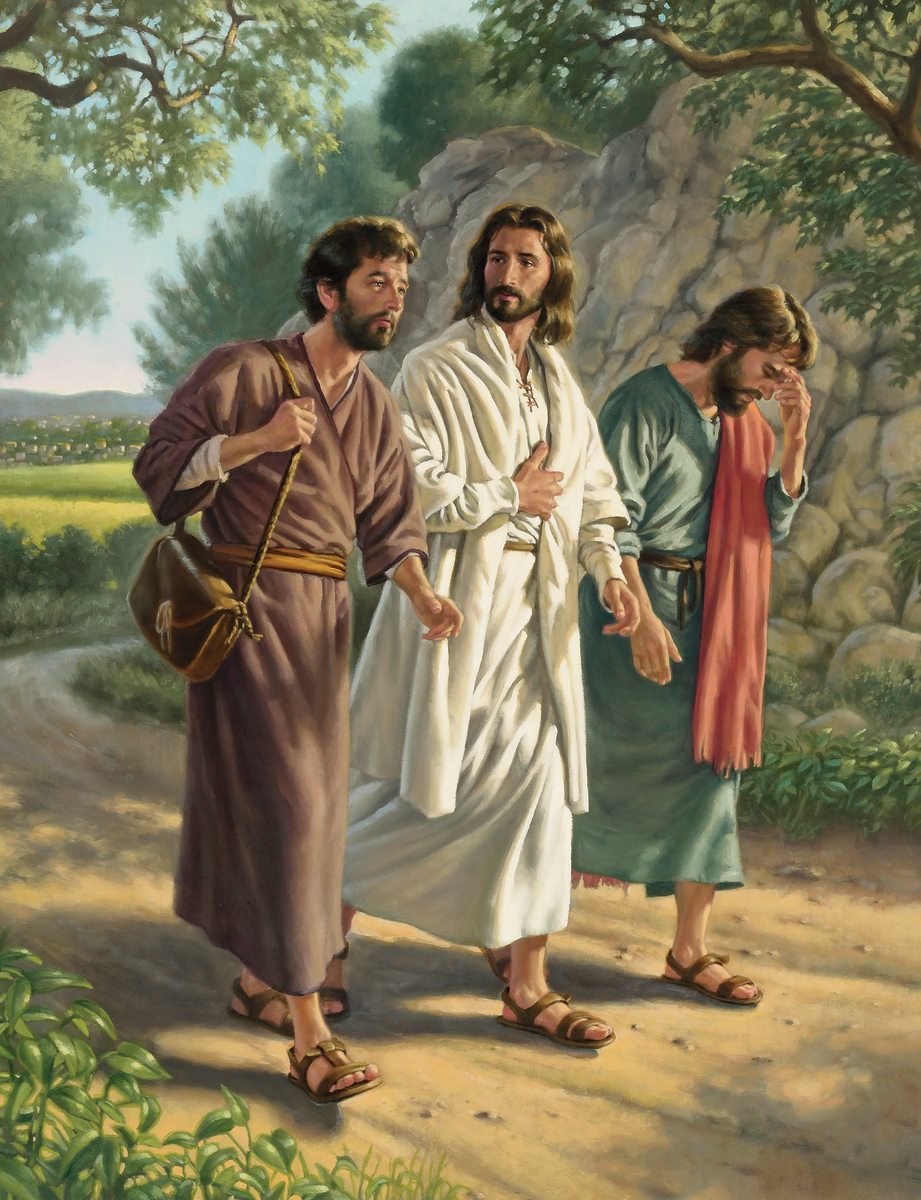
Several weeks ago a pastor at our church gave a sermon based on the story of the Road to Emmaus. For anyone who might be unfamiliar with it, the story can be found in Luke 24:13-35, and it is about who two followers of Jesus encountered when they were walking to a village about seven miles from Jerusalem on the day Jesus rose from the dead — before that news had widely spread. There are many fascinating aspects to the story, but this time when I was reading it one particular fact struck me in a way it had not done before. The story begins like this:

“That same day two of Jesus’ followers were walking to the village of Emmaus, seven miles from Jerusalem. As they walked along they were talking about everything that had happened. As they talked and discussed these things, Jesus himself suddenly came and began walking with them. But God kept them from recognizing him.

“Jesus asked them, ‘What are you discussing so intently as you walk along?’

“They stopped short, sadness written across their faces. Then one of them, Cleopas, replied, ‘You must be the only person in Jerusalem who hasn’t heard about all the things that have happened there the last few days.’

“‘What things?’ Jesus asked.

“‘The things that happened to Jesus, the man from Nazareth,’ they said. ‘He was a prophet who did powerful miracles, and he was a mighty teacher in the eyes of God and all the people. But our leading priests and other religious leaders handed him over to be condemned to death, and they crucified him. We had hoped he was the Messiah who had come to rescue Israel. This all happened three days ago.

“‘Then some women from our group of his followers were at his tomb early this morning, and they came back with an amazing report. They said his body was missing, and they had seen angels who told them Jesus is alive! Some of our men ran out to see, and sure enough, his body was gone, just as the women had said.

“Then Jesus said to them, ‘You foolish people! You find it so hard to believe all that the prophets wrote in the Scriptures. Wasn’t it clearly predicted that the Messiah would have to suffer all these things before entering his glory?’ Then Jesus took them through the writings of Moses and all the prophets, explaining from all the Scriptures the things concerning himself.”

What struck me was the line: “But God kept them from recognizing him.” (Luke 24:16). The immediate question that comes to mind is why? Why did God prevent these followers from recognizing Jesus the moment He appeared to them? As the story relates, the men were clearly distraught by the events of the crucifixion. As I attempted to convey in my last post, His followers’ whole worlds were turned upside down when Jesus was killed. These men tell Jesus that they had “hoped he was the Messiah,” and then those hopes were seemingly dashed by Jesus’ sudden and gruesome demise, which they probably witnessed. So, why in the world would God prevent these grieving men from recognizing Jesus standing in the flesh before them?

Of course, you start to get some sense of the answer as the story unfolds. First, the men honestly told Jesus what they believed: they thought Jesus was a great prophet and teacher, but they were unconvinced that He was the Messiah. Jesus then explained the Scriptures (what we today call the Old Testament) to them as they were meant to be understood, with Jesus at their center. His teaching was so powerful that the men literally begged Him to stay with them longer even though they still didn’t actually know who He was.

“By this time they were nearing Emmaus and the end of their journey. Jesus acted as if he were going on, but they begged him, ‘Stay the night with us, since it is getting late.’ So he went home with them. As they sat down to eat, he took the bread and blessed it. Then he broke it and gave it to them. Suddenly, their eyes were opened, and they recognized him. And at that moment he disappeared!

“They said to each other, ‘Didn’t our hearts burn within us as he talked with us on the road and explained the Scriptures to us?’ And within the hour they were on their way back to Jerusalem. There they found the eleven disciples and the others who had gathered with them, who said, ‘The Lord has really risen! He appeared to Peter.'”

After the encounter, the men didn’t sit around or go to bed; they got right back on the road back to Jerusalem to tell the Disciples what had happened to them. They were practically bursting with the news. These men, who had been followers, were now true believers in Jesus as the Savior of the world because now they had to tell people about Him.

Thus, by the end of the story, it becomes clear that God kept the men from initially recognizing Jesus for their own good. Their belief needed the uncertainty, and, dare I say, the pain, that came from not understanding what had happened to Jesus. It needed those prompting questions from a seeming stranger to bring their honest doubts to the surface. The men also clearly needed guidance from Jesus to traverse this spiritual journey from anxiety to exuberance about Jesus, but they did not really know that was their need. In short, in order for the men to experience a progression from factual knowledge about the Bible and Jesus to genuine understanding and faith in who Jesus really is, the men had to be kept in the dark for a little while. Timing was crucial to a correct understanding of the answers they sought.

So, you might be thinking: “That’s all very interesting with regard to how people come to a saving knowledge of Jesus, but why are you writing about it in this blog that is dedicated to Ethan?” And the answer is that I think God can be telling us more than one thing through the stories He has preserved for us in the Bible. I have no doubt that the story of the men on the Road to Emmaus is about a journey toward faith in Jesus. But it also can have something to say about how God raises His children.

No one knows us better than God because He made us. “For you created my inmost being; you knit me together in my mother’s womb.” (Psalm 139:13). He knows what we need, and, just as important, when we need it. So, when this story says, “God kept them from recognizing Jesus,” it suggests that there are times that God purposefully does not reveal to us the answer to a question we ask — even when we desperately want an answer for good an understandable reasons — because the timing is not right for us to receive that answer. For reasons we cannot fathom at the time, we must walk through a period of pain, uncertainty, inquisition, and spiritual guidance from the Lord before we are prepared to fully grasp the import of the answer.

If you think about it, we do the same with our own children. Children ask questions all the time that we know the answers to, but for a variety of reasons we do not provide them with an immediate direct answer. In many cases, we do not reveal the answer because the child is not ready to understand the answer. It is better for the child that the answer waits for a more appropriate time. This can be true for something as simple as a birthday surprise or as profound as how they came to be. In fact, there are even times when we will tell them the true answer because it is unavoidable, but they will not come to grasp the full import of that answer until many years later. I know this last one to be true from telling our other children when we came home from the hospital on March 10, 2017, that Ethan was not coming home. Our other children are still too young to really understand what his absence means.

The question I always ask God is Why? Why would You let our Ethan die so young, before we could see all he was meant to be? Why would You perform this miraculous work of creating so precious a creature inside his mother — together with his brother Noah — and then let that “wonderful work” die in our arms? (Psalm 139:14). Why would You allow this harrowing experience of twins being born in the back of an ambulance in an ice storm, only to then watch one of them expire after being raced to a hospital in another ambulance? Why would You have him be born with a hole in his heart, so that each of his days before a necessary (but supposedly common) surgery were a painful struggle for him, only to have him leave us before he could have that operation? Why? Why? Why?

Aside from the cold reality that evil really does exist in this world, God has not given me an answer. And to be honest, I believe that I am going to live the rest of my life — however long it is — without receiving an answer. I know that sounds depressing. And again, to be honest, there are a lot of times that the silence that surrounds that pleading question is just that: depressing, forlorn, dark — much like I imagine those men on that Road felt two days after Jesus had cried out from the Cross “My God, my God, why have You forsaken me?” before He breathed His last. (Matthew 27:46).

But it is also good to remember that this does not mean there isn’t an answer. The answer to Jesus’ question from the Cross came the moment He took His first breath in that tomb Sunday morning. The answer to those men’s questions was standing right in front of them even though they did not yet know it. It is a mistake to be believe that just because you do not receive an immediate answer to a heartfelt question that no answer exists -– or that you will never receive it. Sometimes the when is just as important as the what.

And I believe that there is a reason I have to wait for the answer to my question. I am well aware in saying this that it means God is purposefully allowing me to travel this road of uncertainty, doubt, and yes, even pain before I receive the answer. That is not an easy thing to accept, but the truth is often not easy; it is, however, necessary. And, by the way, that does not mean it is easy for God to make me wait, just as it is sometimes hard for me to keep an answer from my own children. God knows that I ache, and grieve, and wonder, and I believe that it rends His heart to watch me go through this experience. (Psalm 56:8).  But if sometimes what is best is not what is easiest, then that is as true for God as it is for us. So, in His infinite wisdom, He keeps the knowledge from me even though it pains Him to do so.

But please do not misunderstand: I am not saying that God thought Ethan needed to die in order for me to experience some kind of spiritual progression in my life. Some well-meaning Christians, in a round about way, say things like this to fellow believers who have suffered excruciating losses in an attempt to offer meaning for a senseless event. It isn’t true. What these people do not realize is that what they are really saying is that the loved one the fellow believer lost was just a pawn for God’s work in that believer’s life. That is an insult, not a comfort. How could this be if Ethan, like all of the other precious ones who are tragically lost through no fault of their own, is “fearfully and wonderfully made?” (Psalm 139:14). Pardon me for the bluntness, but this idea that all things occur for your own betterment is an extraordinarily selfish view of life. There is a distinct and important difference between understanding that God can produce good from the ash of tragic circumstances and saying that tragic circumstances are for our good. The former is Biblical truth; the latter is nothing less than the denial of the existence of evil.

What I am saying is that for some reason, I am not ready for the full answer to this question of Why. I think it is likely that at least part of the reason is simply that my finite existence is incapable of understanding it. Regardless, what is important for me to grasp is that sometimes God does not give us an immediate answer, not because it doesn’t exist or because we don’t deserve one, but rather because it is absolutely necessary for us to wait in order for the answer to have the meaning it is intended to have. And so I must wait. But I do not wait as one with no hope:

“It is wrong to say that the Almighty does not listen, to say the Almighty is not concerned. You say you cannot see him, but He will bring justice if you will only wait.” (Job 35:13-14).

One day I will have an answer, but it will be better than just a mystery revealed; it will include setting this wrong aright again.

“Yes, the Sovereign Lord is coming in power. He will rule with a powerful arm…. He will carry His lambs in His arms, holding them close to His heart.” (Isaiah 40:10-11).

I will not just get to see why; like the men on that Road, I will get to see Who is the answer. And I will see Him holding Ethan in His arms . . . waiting for me.

A Perpetual Saturday

Ethan’s Dad: I never really gave much thought to that Saturday. It wasn’t that I was flippant about it or that I purposefully ignored it. It was just that, in the Christian tradition I grew up in (and I think most others), all of the focus is placed on Good Friday and Easter Sunday. In many ways this is perfectly understandable.

Good Friday is the cataclysmic crisis point in which everything comes crashing down, the unthinkable occurs, and abject evil appears to win. For Christians that day is the definition of the ultimate sacrifice by the only One capable of making it for our sins.

In the starkest of contrasts, Easter Sunday is the glorious climax, the triumph, the grandest of all happy endings. It is the impossible of resurrection from the dead occurring, and yet it was simultaneously inevitable if Jesus was who He said He was because death could not hold onto the Author of life. For Christians that day means a new and ultimately eternal life with God.

So it is little wonder that Saturday is overlooked or even forgotten as it bridges these two profound and all-important days. But you don’t traverse a chasm without a bridge, so it is a required part of the journey, and — I have come to realize — it is more precarious than at first it might seem to be.

Can you imagine for a moment what that day must have been like for Mary, the Disciples, and others close to Jesus? Jesus had completely changed their lives: shown them miraculous signs reminiscent of wonders spoken about by ancestors of old, opened the doors of love beyond their previous comprehension, given them a brand-new purpose for life, and offered a hope unlike any they had ever known before. He had promised them an eternity with Him.

And then it all came to a sudden and sickening end in the span of one dark day. It must have been extremely confusing for them to watch Jesus be arrested, let alone witness Him beaten, then offered to the crowds, and then crucified like a common criminal. Everything they had known, believed, and hoped was instantly shattered beyond all recognition the moment Jesus breathed His last on that cross. It had to seem almost surreal, like it had to be a nightmare that they would surely awake from at any minute.

But when Saturday dawned, the darkness was still there, and it was, if anything, more oppressive. The sheer intensity of the trauma from the previous day was replaced by the stark void of the loss. Jesus really was not there. His leadership, assurance, and love were gone. More immediately, His presence was missing. And somehow they had to go on.

Remember that they did not know what would happen on Sunday. Jesus had tried to tell them, of course, but they just couldn’t understand it. Honestly, in a way you can’t blame them. It was all unlike anything that had ever happened before. Granted, as I have said, they had witnessed Jesus precipitate several miraculous events on a smaller scale: feeding thousands with almost no food, calming raging seas and walking on water, raising Lazarus after he had been in a tomb for 4 days. But this time they had watched Him die. And not just any death, but the most gruesome devised by the Roman Empire. It had to feel devastating, bewildering, hopeless. Surely they just wanted to crawl into a shell and never come out.

So they waited . . . and wondered. What was there left to do? How do you hold onto faith when everything you believed is turned upside down? How do you maintain hope when you watch it breathe it’s final breath? How do you continue to love when what illuminates that love is buried in a tomb? The questions are endless and the answers are elusive; they feel out there, yet not accessible. That Saturday they lived in a kind of netherworld — not really dead, but not capable of fully living either.

“So they took His body down
The man who said He was the resurrection and the life
Was lifeless on the ground now
The sky was red His blood along the blade of night

“And as the Sabbath fell they shrouded Him in linen
They dressed Him like a wound
The rich man and the women
They laid Him in the tomb

“….

“So they laid their hopes away
They buried all their dreams
About the Kingdom He proclaimed
And they sealed them in the grave
As a holy silence fell on all Jerusalem”

-Andrew Peterson (God Rested)

If you haven’t already guessed it, the reason for this rumination (other than the fact that it is Easter weekend) is because for my wife and I it feels as if we are living every day in something like that Saturday. You see, on one level, the day of a tragic event is the hardest because the vividness of its devastation haunts you over and over again. But in another sense, the day after is almost harder. At the time, the day of the event seems surreal, like it can’t be happening, like you are watching it from the outside as it unfolds. But the day after the horror, the reality hits you because the frantic energy of the moment is no longer there, and a person you love gone. The stark realization of permanent absence desolates your soul and you can hardly breathe, let alone dare to believe that one day the chasm of that loss will disappear and you will be reunited again.

An irreplaceable presence, our Ethan, is missing from our lives every day. It is an absence we did not ask for or expect. And that absence stretches on, with each new day bringing an ache and unsettledness that never quite subsides. When we say we are “Walking in the Shadowlands,” this is, in large part, what we mean.

An undeniable fact about that Saturday long ago is that God knew what it would be like for those close to Jesus after He was crucified.  God knew about the pain, confusion, and uncertainty, and yet He did not break through the silence to give them reassurance. He let then wait until Sunday to see the answer for themselves. I think it is worth asking: Why did God allow them to endure that Saturday?

The most immediate answer is that He knew everything would be made right again on Sunday. But what if it was more than that? Suppose that the waiting, with all of its attendant anguish, bewilderment, and doubt, was a necessary part of the process for the revelation of the Resurrection.  Would the Disciples have fully grasped the implications of the Resurrection without experiencing what life would be without Jesus’ presence?

Of course, Christians today know how the whole story unfolded, so it is harder to grasp what the loss of Jesus must have felt like on that Saturday.  But we do experience personal losses, sometimes profound ones.  And sometimes, when there is a loss that is wretchingly dear, God asks us to wait the rest of our earthly lives — to trust Him in the midst of the daggers of pain and whirlwinds of questions — until we come to the end of that seemingly perpetual Saturday and see that the loss will be made whole.

For me, then, there is a strange comfort in the fact that dark Saturdays are not alien to Christianity; they are, in fact, apparently somehow integral to it.  It does not lessen Ethan’s loss for me, but it does show me that God knows what I am feeling, and the fact that He has let me experience it is not proof that He is not there, as some would tell you.  Instead, the loss of that precious boy, and the restless unease that accompanies it, imparts a little more understanding of what life would mean without Jesus, without His death, burial, and resurrection.  So, I will keep walking in the shadows and looking forward to dawning of that Sunday when

“the Lord Himself will descend from heaven with a shout, with the voice of the archangel and with the trumpet of God, and the dead in Christ will rise first. Then we who are alive and remain will be caught up together with them in the clouds to meet the Lord in the air, and so we shall always be with the Lord.” (1 Thessalonians 4:16-17).


Planting Seeds

SERVICE_BERRY_TREE

Ethan’s Mom: Two years ago today (March 15th), I buried my son.

There have been so many hard memories floating to the front of my mind this week. Many of them are of dark and terrifying moments. A few from today were moments of grace and beauty in the midst of extreme tragedy. The day of the funeral dawned bright and clear. It was an unseasonably cold day but the sun was shining brightly, and I was so grateful it wasn’t raining or gloomy as it had been the preceding days.

Today was another sunny March day, only it was about 20 degrees warmer. It was a great day to be out in the backyard, and the kids and I ended up doing a spur of the moment gardening project. I have been fascinated by gardens ever since two special friends from church made an “Ethan Garden” for us. They took an overgrown, messy garden bed in our backyard and transformed it into an abstract heart shaped area that includes the hydrangea and calla lilies that our parents sent to the funeral home. Last fall, I made my first attempt at growing something back there, and a few weeks ago, sunny yellow daffodils started peeking out from around the perimeter. I look out the back windows countless times a day to gaze at my cheery buttercups.

Today was less about the anticipated results and more about the act of digging, clearing, and planting connecting me to the bigger picture. I don’t know what kind of blooms we will see from the wildflower mix purchased from the dollar store, but I know preparing the soil and planting the seeds was what my heart needed to do today.

The three bigger kids helped me clear out and till up a patch of earth back under their little treehouse platform. We dug and pulled weeds but we also found a few “creatures” as my daughter kept calling them. We sprinkled seeds and talked about how they would grow into flowers. We watered them in while talking about what kind of butterflies we might see, as the box assured us that the included flowers are favorites among butterflies.

The daffodils and the wildflower seeds brought to mind this sweet hymn that I learned in college. Who knew the words would become so meaningful to me almost 20 years later?

In the bulb there is a flower;
in the seed, an apple tree;
in cocoons, a hidden promise:
butterflies will soon be free!
In the cold and snow of winter
there’s a spring that waits to be,
unrevealed until its season,
something God alone can see.

There’s a song in every silence,
seeking word and melody;
there’s a dawn in every darkness
bringing hope to you and me.
From the past will come the future;
what it holds, a mystery,
unrevealed until its season,
something God alone can see.

In our end is our beginning;
in our time, infinity;
in our doubt there is believing;
in our life, eternity.
In our death, a resurrection;
at the last, a victory,
unrevealed until its season,
something God alone can see.
(Hymn of Promise, Natalie Sleeth)

Gardens are places where the veil is thin, and we can see beautiful imagery of incomprehensible truths. When you start seeing signs of new life burst forth this spring, I hope you will join me in marveling at nature’s foreshadowing of the coming joy when “up from the earth, the dead will rise like spring trees clothed in petals of white…and we will always be, always be, always be with the Lord.” (Remember Me, Andrew Peterson)

Come Lord Jesus.

Two Years

IMG_4879

“There isn’t any good way to start writing about this. My son is dead. I can write that as a definitive statement but it doesn’t feel like that. It really feels like he is just staying somewhere else for a moment and we will go pick him up. But, of course, we would never do that with a two-month old. We would keep him close; watch his every move; hold him over and over. And then there is the fact that I saw him on that table in the hospital laying still. And then I saw him in that tiny coffin at the funeral home. Those are images I am certain I will never forget.

“….

“This was the worst day of my life. It will always be the worst day of my life. I will never forget it. I will never be whole from it. I will never understand it. My baby, my little caboose, my Ethan, is gone. And my single hope is that one day I will see him again. I will live the rest of my years waiting for that day.”

Ethan’s Dad: Those were the first and last paragraphs of my first written expression about Ethan that I wrote two years ago, soon after he died.  I will not share the rest of that writing because it is too personal, too raw — too much even for this space. But for me those first and last paragraphs are fitting on this day — this day that marks two years from the moment Ethan left us. They are fitting because no matter how much has changed over the past two years, those thoughts remain the same.

Much has changed. I no longer always feel cold or desolate or listless. I now see Ethan’s mom smile when his twin brother does something amusing. I still sit beside his grave, but not with the feeling that the whole world could be rushing past and I won’t care because there is nothing else of importance to do. That dagger in my heart pokes intermittently rather than slicing with incessant fury.

And yet . . . and yet every now and then it still seems to me as if Ethan is just staying somewhere else overnight and we will wake up and see him in the morning. I still long to hold him. I still remember him lying on that metal table, unmoving.  I still remember the awful coffin and a quiet that shattered our world. I still know it to be the absolute worst day of my life, even amidst the experiences of other days of profound fear and heaviness.

This is not a day of celebration. It is not a day of fond farewells and whimsical dreams. It is a day of darkness, a day of mourning, a day of counting an immeasurable loss. It is a day I would never wish upon anyone in all the world, no matter how otherwise evil a person may be, and yet I know all too well it is unfortunately shared by many who also have lost a child, perhaps by some reading these very words.

To you all I can say is that I also still have that single hope — actually stronger now than when I wrote those words two years ago — a hope that I will see Ethan again because of the One seated on the throne who says “Behold, I make all things new!” (Revelation 21:5)

I will not pretend that this hope makes it all better here and now. It does not. This day is still excruciating. This is a loss I still cannot fully fathom. My life, my entire family’s life, will always be different — be less — than what it was to be with Ethan among us. I cannot comprehend how God will rectify such an absence. All I know is that He promises that He will.  This is why Jesus came:

“To proclaim freedom for the captives,
to release prisoners from the darkness,
to proclaim the year of the Lord’s favor
and the day of vengeance of our God.

To comfort all who mourn,
and provide for those who grieve in Zion—

“To bestow on them a crown of beauty
instead of ashes,
the oil of joy
instead of mourning,
and a garment of praise
instead of a spirit of despair.

“They will be called oaks of righteousness,
a planting of the Lord
for the display of his splendor.” (Isaiah 61:1-3)